
Industrial Motor & Energy Solutions for Mining
MotiraTech provides permanent magnet direct drive systems, industrial battery energy storage systems and field engineering services for mining operations — from conveyor drive heads and mineral processing equipment to peak demand management and remote mine site power.
Solutions for Mining Operations
Three capabilities, applied to the equipment and power problems that mine sites actually raise: drivetrains that fail where they are hardest to service, demand and fuel costs set by how the plant runs, and engineering support at the point of installation.
Permanent Magnet Direct Drive
Gearless drive systems for conveyors and high-torque, low-speed mineral processing equipment, applied as new installations or retrofits of existing drivetrains.
PMDD systemsIndustrial Battery Energy Storage
Storage configured against measured site load for demand management, load shifting, weak-grid support and remote or off-grid mine site power.
BESS systemsField Engineering & Commissioning
Site assessment, equipment and electrical integration, motor and BESS commissioning, startup and continuing field support.
Field services- Industrial Field Engineering & Commissioning
- Supports both drive and energy system deployments.
Where direct drive is applied on a mine site
A permanent magnet motor wound for the driven speed removes the reducer from the drivetrain. That is worth considering where the shaft turns slowly, torque rather than speed defines the machine, the duty is continuous and the drive head is difficult to service — not as a default replacement for every gearbox on site.
Conveyor drive systems
How direct drive is applied to mining conveyors, and how an existing drive head is assessed for retrofit.
PMDD technical information
Motor ranges, cooling arrangements, mounting configurations and the data required for a drive selection.
Industrial BESS for Mining Operations
Not every mine site needs storage. Where it is relevant, the case is normally set by the tariff structure, the shape of the load, the strength of the connection or the cost of running generation locally.
Mining Applications
The four application routes most mining enquiries follow.
Conveyor drive systems
Direct-drive and permanent magnet solutions for mining conveyor applications, including retrofit of existing motor-and-gearbox drive heads.
Conveyor drive systemsIndustrial energy storage
Battery energy storage for demand management, load shifting and operational resilience at processing plants and mine infrastructure.
Industrial BESSPeak demand management
Using storage to manage industrial demand peaks where the tariff structure and load profile make it commercially and technically appropriate.
Peak demand managementRemote & off-grid power
Energy storage and hybrid power for remote mine sites, exploration camps and islanded operations with local generation.
Remote industrial powerEngineering support at the point of installation
Equipment supply on its own rarely solves a site problem. The integration and commissioning scope is defined with the site team and delivered directly or coordinated, with the delivery mode stated in the proposal.
Field engineering and technical services
Assessment, integration, commissioning and continuing technical support for installed drive and energy equipment.
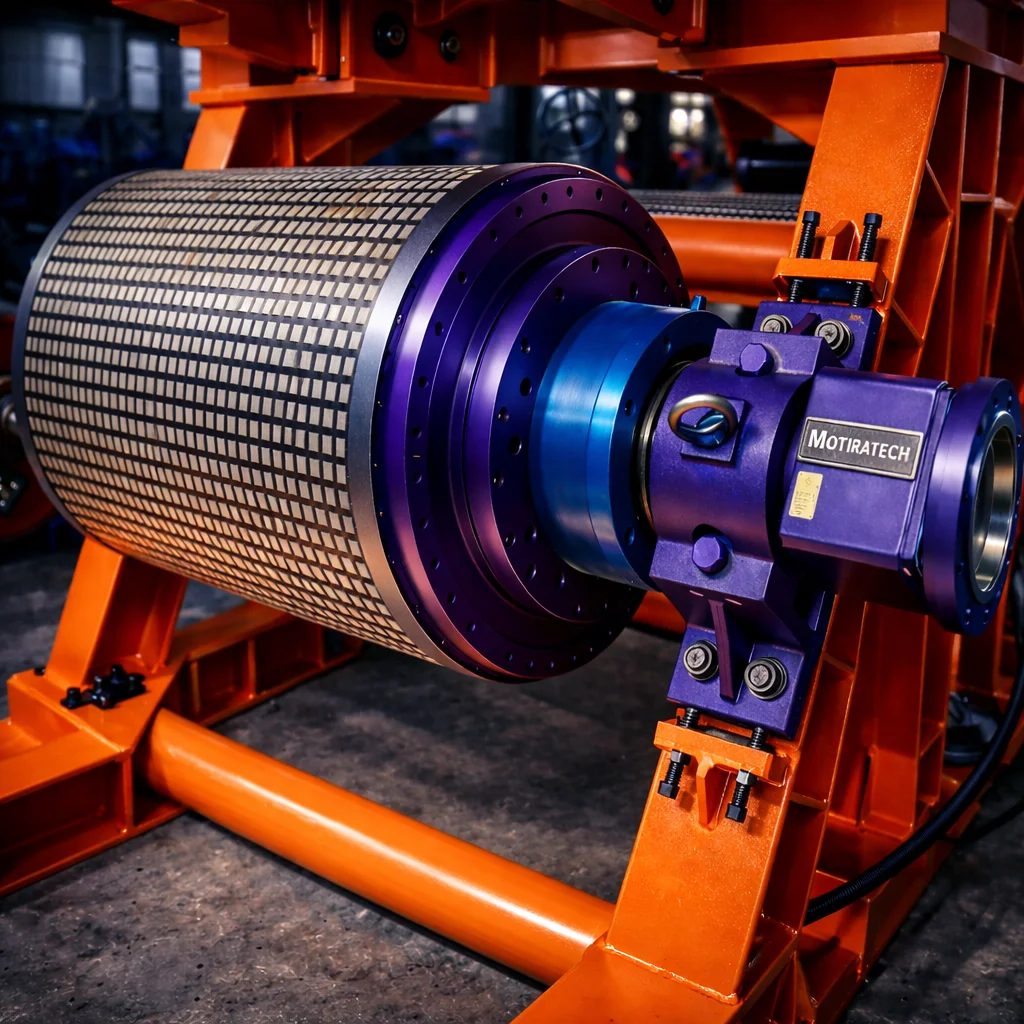
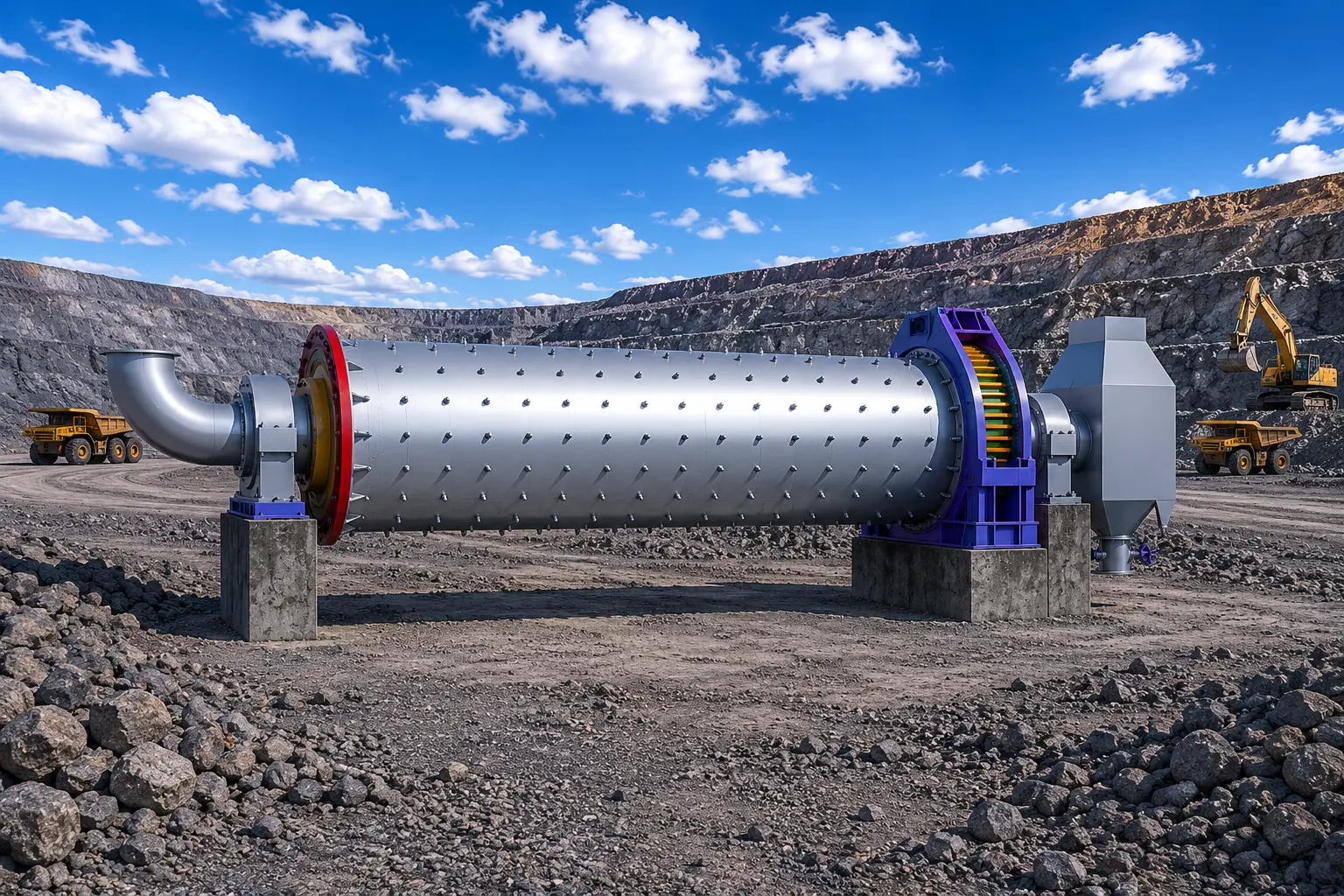
Drive and storage equipment in mining service
What We Need to Evaluate a Mining Project
A mining assessment is based on site data, not generic equipment sizing. Two different data sets apply depending on whether the question is a drivetrain or an electrical one — send whatever you have and we will identify the gaps.
PMDD / conveyor drive project inputs
Used to establish the torque and speed the motor must produce, whether the mechanical envelope at the drive head accepts a direct drive, and whether the existing supply and control equipment can be retained.
- Conveyor or machine type
- Overland, incline, underground or feed belt; or mill, drum screen, thickener, fan or pump.
- Conveyor geometry
- Belt length, lift or elevation change, belt width and drive head arrangement (single, dual or tripper).
- Duty data
- Belt speed, design and actual throughput in tonnes per hour, and hours of operation per day.
- Torque and power
- Calculated or measured shaft torque and absorbed power, including any known starting or breakaway requirement.
- Existing motor
- Rated power, voltage, speed, frame and mounting, with nameplate data where available.
- Existing gearbox
- Ratio, service factor, coupling arrangement, lubrication system and maintenance or failure history.
- Pulley or drum
- Drum diameter, shaft diameter, bearing arrangement and whether the pulley can be replaced within the project.
- Drive control
- Starting method in use — DOL, soft starter or VFD — and whether an existing VFD would be retained.
- Electrical supply
- Available service voltage, incoming capacity at the drive head and cable routing to the drive room.
- Site conditions
- Surface or underground, ambient temperature range, dust and moisture loading, altitude and hazardous-area requirements.
- Installation constraints
- Mechanical envelope at the drive head, crane or access limits, and available shutdown windows.
Conveyor drive applications
How a mining conveyor drive head is assessed for a direct-drive retrofit.
BESS project inputs
Used to establish whether storage is worth applying at all, and — if it is — the power and energy rating, the point of interconnection and the dispatch strategy the system would run.
- Utility tariff
- Rate schedule including the demand charge structure, time-of-use periods and any ratchet provisions.
- Interval load data
- Metered interval data — ideally 12 months — so the load shape, not an average, drives the sizing.
- Peak demand
- Billed peak demand by period, and what plant activity produces those peaks.
- Operating schedule
- Shift pattern, processing schedule and any seasonal or campaign variation in load.
- Critical loads
- The loads that must ride through an interruption, with their power draw and required duration.
- Existing generation
- Gensets, solar or wind already installed, with ratings, fuel cost basis and current control arrangement.
- Grid connection
- Service voltage, connection capacity, feeder strength and any known voltage or capacity constraint.
- Operating strategy
- Whether the intent is peak shaving, load shifting, backup, islanding, renewable integration or a combination.
- Electrical capacity
- Available switchgear positions, spare breaker capacity and the intended point of interconnection.
- Installation space
- Available footprint and foundation, access for delivery, and clearance and fire-separation constraints.
- Environmental conditions
- Ambient temperature range, altitude, dust exposure and seismic or wind design requirements.
Industrial battery energy storage
System architecture, configuration and the engineering basis for an industrial storage assessment.
Direct drive vs. gearbox
A technical comparison of drivetrain architectures for conveyors.
Industrial demand charges
How demand charges work and where storage can reduce them.
Other industries
Bulk material handling, ports, cement, pulp and paper, steel.
Representative drive configurations in mining duty
Configurations below are drawn from manufacturer selection and reference documentation for permanent magnet direct drive equipment supplied into mining and mineral processing duty. They are published as reference data for sizing discussions, not as MotiraTech project experience, and final selection is confirmed against measured machine data.
Full motor family parameter ranges — line-start, variable-speed, low-speed direct drive and motorized pulley — are consolidated in the motor selection reference.
| 01Configuration | 4 × direct drive pulleys, multi-drive head |
|---|---|
| 02Power per pulley | 315kW |
| 03Voltage | 1 140 V |
| 04Protection | Flame-proof execution for underground duty |
| 05Application | Rapid-excavation belt conveyor, coal |
| 01Power range | 75 – 560kW |
|---|---|
| 02Voltage | 380 V / 660 V |
| 03Environment | Humid and corrosive process areas |
| 04Application | Potash mine conveying |
| 01Configuration | 5 × direct drive pulleys |
|---|---|
| 02Power per pulley | 315kW |
| 03Voltage | 1 140 V |
| 04Application | Large-scale iron ore materials handling |
| 01Rated power | 800kW |
|---|---|
| 02Voltage | 10 kV |
| 03Rated speed | 187rpm |
| 04Protection | IP 55 |
| 05Application | Non-ferrous metals grinding |
| 01Rated power | 3 150kW |
|---|---|
| 02Voltage | 10 kV |
| 03Rated speed | 127rpm |
| 04Protection | IP 55 |
| 05Duty | Continuous variable-speed flotation duty |
| 01Voltage | 380 V |
|---|---|
| 02Rated speed | 145rpm |
| 03Protection | IP 65 |
| 04Arrangement | Direct fan drive, gearless |
How a Mining Project Is Evaluated
The same sequence applies whether the enquiry starts as a drivetrain problem or an electrical one. Scope that MotiraTech coordinates rather than performs directly is identified in the proposal.
- STEP 01
Application review
Establish the equipment and the operational problem behind the enquiry — a failing drive head, a demand charge, a fuel bill or an unreliable connection.
- STEP 02
Site data
Collect the technical and operating information listed above. Where data is missing, we identify what has to be measured before the assessment can proceed.
- STEP 03
Engineering assessment
Evaluate whether a PMDD drive, a battery energy storage system, field engineering support or a combination is technically appropriate for the application.
- STEP 04
System configuration
Determine equipment architecture — motor and drive selection, or battery and PCS configuration — with the mechanical, electrical and control integration requirements.
- STEP 05
Project planning
Define the installation, commissioning and field scope, including shutdown windows, and state which elements are delivered directly and which are coordinated.
- STEP 06
Implementation
Support deployment, commissioning and startup for the supplied equipment, with the agreed scope of continuing technical support.
Discuss a mining application
Send the equipment, duty data or load profile you are working from. We will tell you what can be assessed, what is missing and what the next step looks like.