
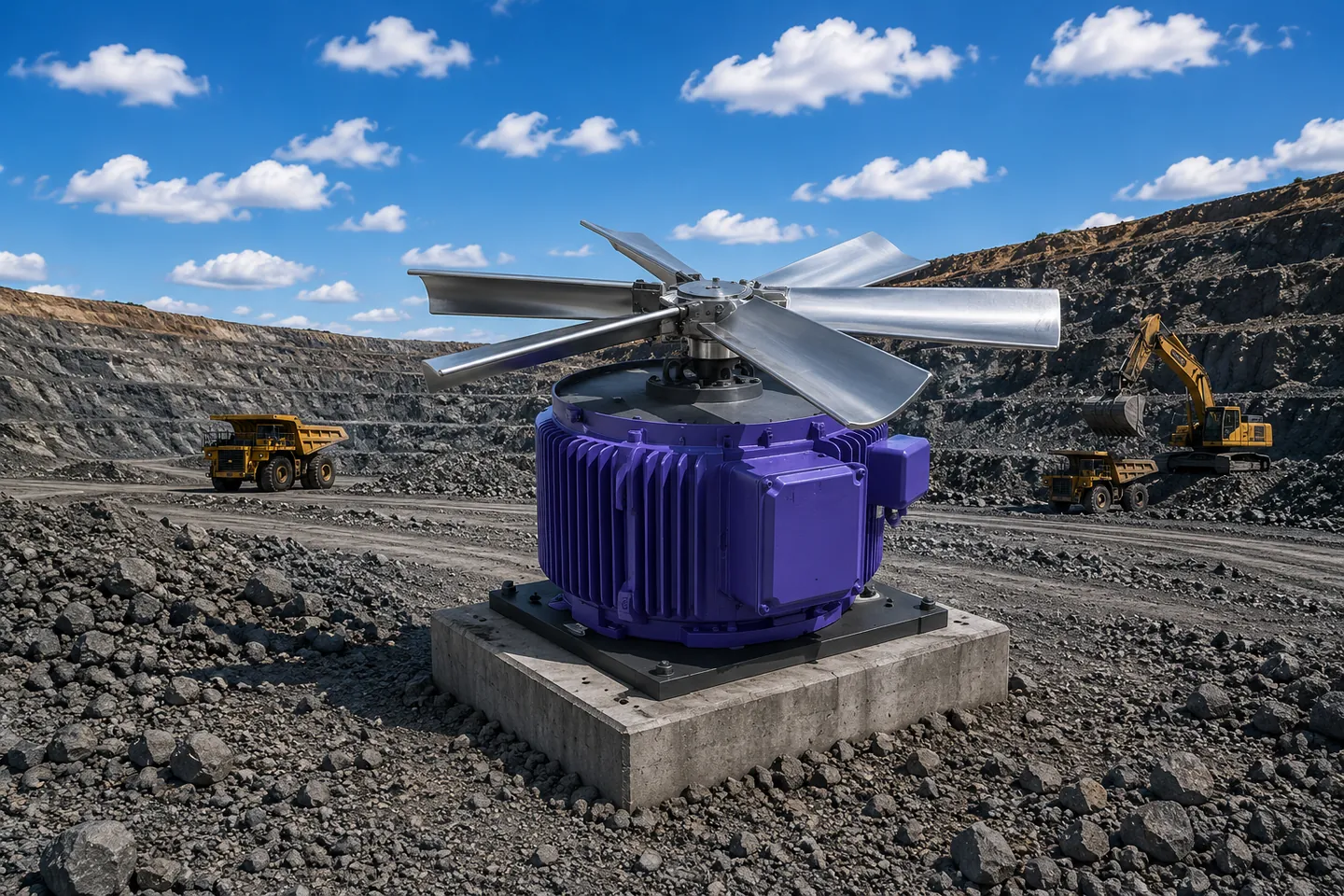
What is PMDD? Permanent magnet direct drive for heavy industry
PMDD is a drivetrain architecture, not a single product: a permanent magnet motor designed to drive industrial equipment directly at its operating speed — without a gearbox. This page explains the engineering principles behind it.
The engineering idea in four parts
Direct drive follows from a straightforward question: if the equipment turns slowly and needs high torque, why generate high speed and low torque and convert between the two?
Permanent magnet rotor
The rotor carries permanent magnets rather than induced current or field windings. The magnetic field is established by the magnets themselves, so no rotor excitation current — and none of its associated losses — is required.
Direct mechanical coupling
The motor is built for the speed the driven equipment actually needs. Torque is delivered straight to the shaft or pulley — there is no gearbox, no high-speed coupling and no gear lubrication system between motor and load.
Low speed, high torque by design
Conventional motors produce high speed and low torque, then trade speed for torque through a gearbox. A PMDD motor is electromagnetically designed for low-speed, high-torque operation from the outset.
Fewer wearing components
Every removed component — gears, couplings, oil systems — is a removed failure mode and a removed maintenance task. What remains is a simpler drivetrain to inspect, align and support.
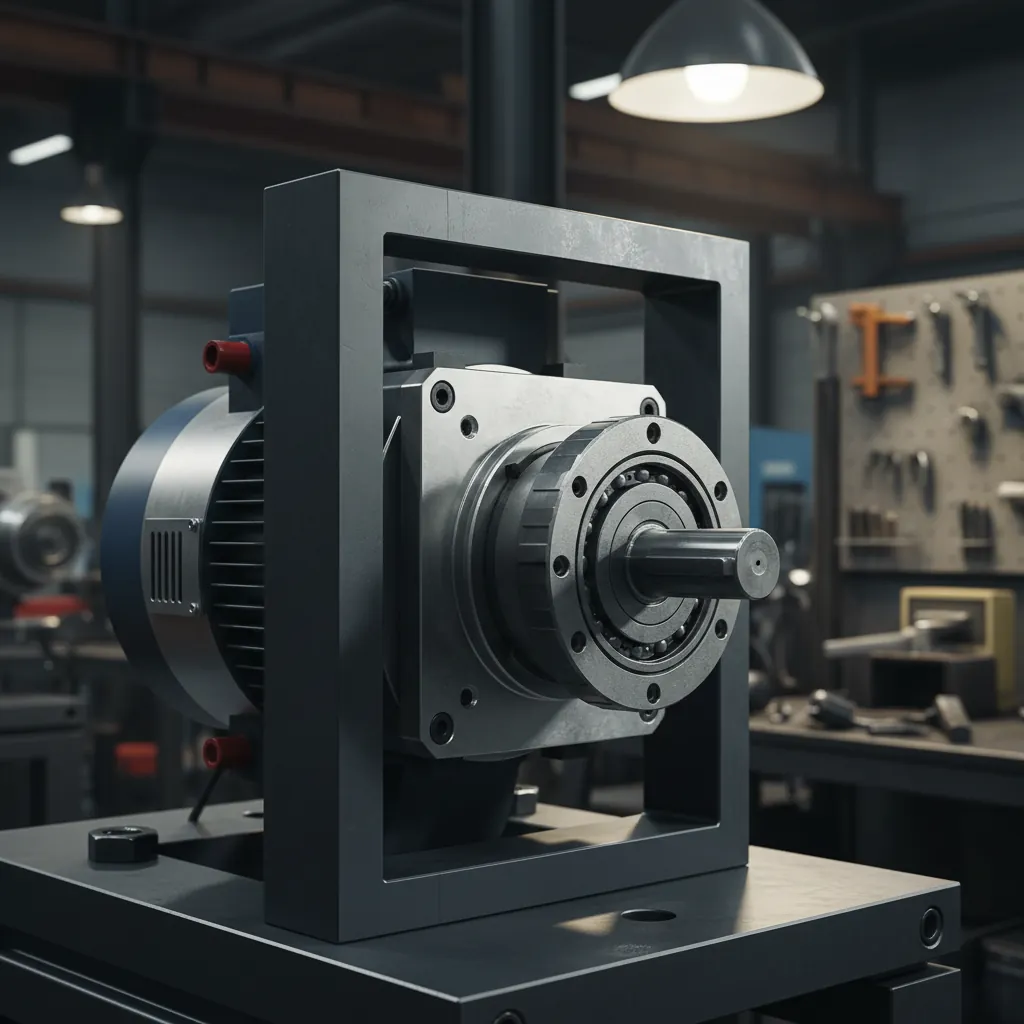
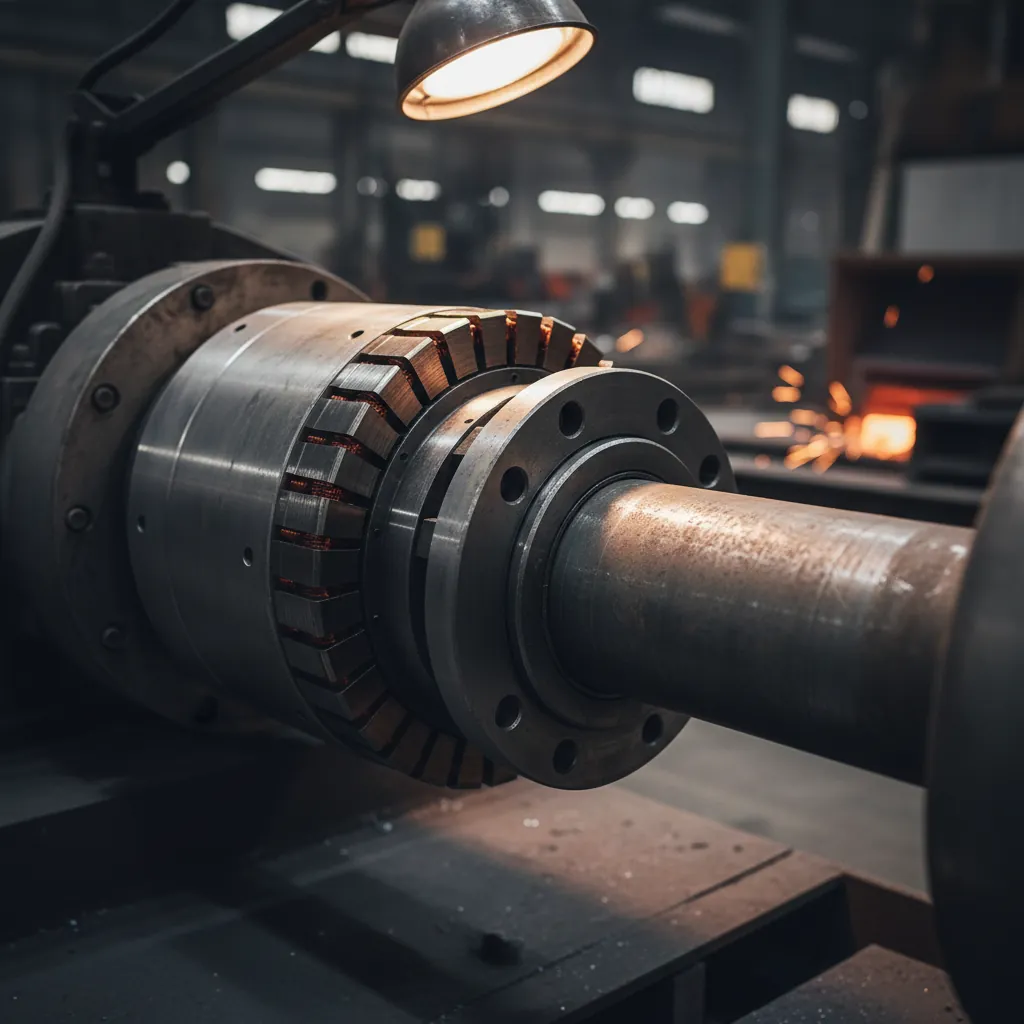
Conventional drivetrain vs. direct drive
The difference is topological: which components sit between the electrical supply and the driven shaft, and which failure and maintenance points come with them.
Conventional motor-and-gearbox drivetrain
A high-speed induction motor feeds a gearbox that reduces speed and multiplies torque. The arrangement is well understood and widely supported — and it carries a gearbox, couplings and lubrication systems, each with its own wear, alignment and maintenance requirements.
PMDD direct-drive architecture
A permanent magnet motor sized for the equipment's operating speed couples directly to the load. The drivetrain shortens to motor and driven shaft, with speed and starting behaviour managed by the variable frequency drive.
Where direct drive earns its place
Direct drive is not universally the right answer. It is strongest where duty is continuous, torque demand is high, access for maintenance is costly, or drivetrain downtime is expensive.
Strong candidates
- Belt conveyors and overland conveying systems
- Continuous-duty material handling in mining and ports
- Applications with costly or difficult maintenance access
- Drivetrains with recurring gearbox or coupling failures
- Remote sites where maintenance logistics dominate cost
Assess before committing
- Highly variable or intermittent duty profiles
- Applications with tight interface or foundation constraints
- Installations where existing spares strategies favour conventional drives
- Any application where drive duty, starting behaviour and site power have not been reviewed together
Terms you will meet in a direct-drive discussion
- PMDD
- Permanent magnet direct drive — a drive architecture where a permanent magnet motor drives the load directly, without a gearbox.
- Gearless drive
- Synonymous with direct drive in this context: no speed-reducing gearbox between motor and driven equipment.
- Low-speed high-torque motor
- A motor designed to produce rated torque at the equipment's operating speed rather than at high motor speed.
- Drivetrain
- Everything between the electrical supply and the driven shaft: motor, couplings, gearbox (if present), bearings and lubrication systems.
- VFD / drive
- The variable frequency drive that supplies and controls the motor — direct-drive systems are typically VFD-fed for controlled starting and speed regulation.
- Retrofit
- Replacing an existing motor-and-gearbox drivetrain with a direct-drive arrangement on operating equipment.
Evaluating a conveyor or continuous-duty application?
Our PMDD solutions page covers application assessment, retrofit and new-build coordination, scope of supply, and the information needed to evaluate your application.
Discuss direct drive with an engineer
Bring the application — tonnage, belt speed, duty cycle and site conditions. We will tell you plainly whether direct drive is the right architecture for it.