
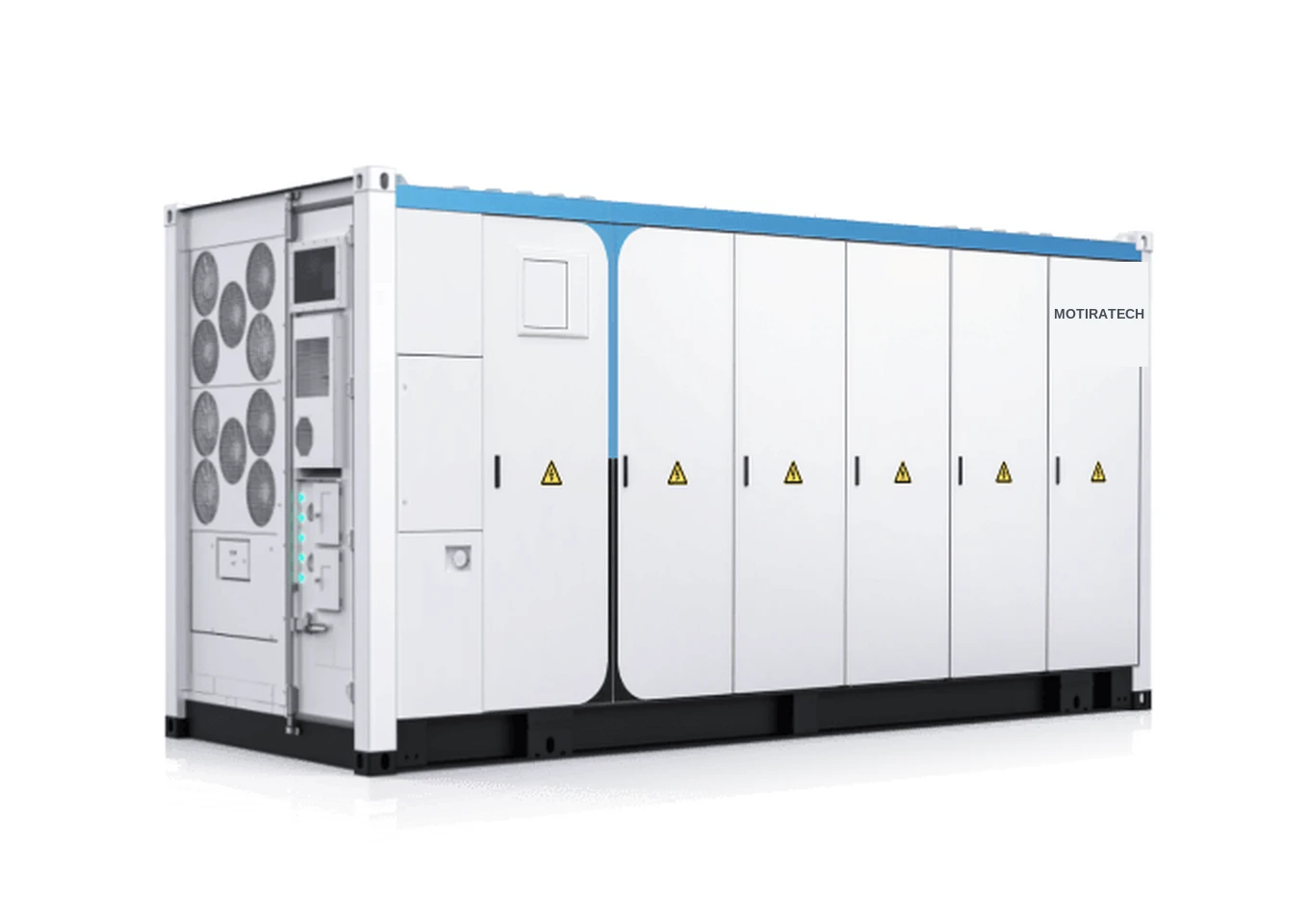
BC Hydro Energy Storage Incentive for Business BESS Projects
Businesses in British Columbia may be eligible for incentives when installing qualifying battery energy storage systems. MOTIRATECH helps commercial and industrial customers evaluate BESS sizing, peak demand management, project economics and incentive requirements.
Program eligibility, incentive amounts and final approval are determined by BC Hydro. The information on this page is provided for general guidance and does not constitute a BC Hydro approval or incentive commitment.
How the BC Hydro Energy Storage Incentive Works
The offer is a demand-flexibility program, not an ordinary equipment rebate. The incentive is tied to the battery capacity a customer nominates as available for dispatch, and to a set of technical and contractual requirements that apply for the term of the agreement.
- 01The offer applies to new battery energy storage systems installed by eligible business customers.
- 02The incentive is based on the battery capacity the customer nominates as available for demand flexibility or demand response events.
- 03Both nominated power capacity (kW) and nominated energy capacity (kWh) affect the calculation.
- 04Only costs that the program defines as eligible project costs are counted.
- 05Technical requirements cover product selection, metering, telemetry and interconnection.
- 06Systems are expected to respond to dispatch signals during demand flexibility events, within the customer's declared reserve.
- 07Non-export operation and protection settings are reviewed as part of interconnection.
- 08DERMS connectivity is required so the system can receive dispatch instructions where the program specifies it.
- 09Applications are pre-approved by BC Hydro before equipment is purchased or installed.
- Energy storage incentive (business)Program overview, offer structure and eligibility criteria.
- Energy Storage Incentive — Customer Program Manual (PDF)Detailed program requirements, DERMS connectivity, agreement term and performance rules.
- Energy storage incentive — application process (PDF)Pre-approval, purchase, interconnection and DERMS connection steps.
- Custom project incentivesFunding pathway for qualifying energy efficiency, efficient electrification and load displacement projects.
- Business electricity ratesApplicable rate schedules, demand charge structure and customer classifications.
Links are provided to BC Hydro for reference only. Program documentation is maintained by BC Hydro and may change without notice.
How the Incentive Is Calculated
Under the current published program the incentive is the lesser of three calculation methods. The applicable incentive is subject to the program rules and is limited by the applicable calculation method and eligible project costs.
$10,000 × kW nominated
Nominated power capacity available for demand flexibility.
$10,000 × kWh nominated ÷ 4
Nominated energy capacity, normalized over a four-hour basis.
80% × eligible project costs
An upper limit applied to costs the program defines as eligible.
Estimate Your Potential BC Hydro BESS Incentive
Enter nominated battery capacity and eligible project cost. The program incentive is calculated as the lesser of the three methods below.
Power capacity nominated for demand flexibility.
Energy capacity nominated for demand flexibility.
Costs that may qualify under the program. Verify against the current program manual.
—
Enter all three values to see a preliminary estimate.
This calculator provides a preliminary estimate only. It is not a BC Hydro application, approval or guarantee of funding. Nominated capacity, eligible costs and final incentive amounts are determined by BC Hydro under its current program requirements.
BC Hydro BESS Eligibility
Use this as a screening checklist before investing engineering effort. Final eligibility is confirmed by BC Hydro against its current program documentation.
- 01A new qualifying battery energy storage system — previously purchased or installed batteries are not eligible.
- 02An eligible BC Hydro business customer account.
- 03Minimum nominated capacity where the program specifies one.
- 04An eligible rate classification under the applicable Electric Tariff.
- 05Required metering, including a working smart meter.
- 06Behind-the-meter configuration serving the customer's own facility.
- 07Non-export operation where required by the program and interconnection review.
- 08DERMS connectivity and communications requirements where applicable.
- 09Demand-flexibility commitments, including nominated capacity available for dispatch.
- 10Installation, interconnection and energization within applicable program timelines.
- 11Other BC Hydro technical, contractual and program requirements in force at the time of application.
What Does "Up to 80%" Mean?
The program may provide an incentive of up to 80% of eligible project costs. That does not mean BC Hydro automatically pays 80% of every BESS project.
The actual incentive for a project depends on nominated power, nominated energy, eligible project costs, program eligibility, the technical requirements the system must meet, and BC Hydro approval. A project can be technically sound and still receive an amount well below the 80% limit because another calculation method produces a lower result.
What Is a Demand-Flexibility Agreement?
Accepting the incentive comes with an ongoing commitment, not just a one-time payment.
In plain terms: the customer nominates a portion of the battery's power and energy as available to BC Hydro, keeps the system connected and able to respond to dispatch signals, and maintains performance over the agreement term. The customer declares how much capacity is held in reserve for their own use. Performance, measurement and payment conditions are set out in the program documentation.
Applicants should review the current BC Hydro program documentation and contractual requirements before committing to a project.
Can BESS Reduce BC Hydro Demand Charges?
A battery energy storage system can potentially reduce a customer's measured peak demand by discharging during selected high-load periods. Whether that produces a billing reduction is site-specific.
- 01Rate schedule and customer classification
- 02Load profile and the shape of recorded peak events
- 03How demand is measured and billed
- 04Battery power available at the moment of the peak
- 05Battery energy available across the duration of the peak
- 06Control strategy and forecasting accuracy
- 07Operating conditions, maintenance and state of charge
- 08The applicable BC Hydro tariff in force
Upload Your Load Data for a Preliminary BESS Assessment
Interval data, recent bills and a single-line diagram are the fastest way to reach a meaningful answer.
BC Hydro demand charges explained
How demand is measured, why kW and kVA differ, and where peak shaving applies.
Richmond, BC BESS peak-shaving analysis
A 1 MW / 2.088 MWh configuration modelled against 19 months of interval data.
MOTIRATECH BESS Project Support
MotiraTech is an engineering and project-development company. We prepare the technical basis a battery project needs and support the application and delivery process — the utility decides on eligibility and incentives.
Load Profile Analysis
Review interval data, demand behaviour, production schedules and seasonal variation.
BESS Sizing
Establish power and energy requirements from measured data rather than catalogue assumptions.
Peak-Shaving Analysis
Model how a candidate system would respond to the facility's recorded peak events.
Incentive Assessment
Screen the proposed project against current published program requirements.
Electrical Engineering
Interconnection point, protection, metering interfaces and site distribution requirements.
EMS & Controls Integration
Dispatch logic, non-export control, telemetry and site control-system interfaces.
Project Economics
Preliminary cost, demand-charge and operating assumptions for internal review.
Installation & Commissioning Support
Coordinate qualified partners, testing, energization support and handover documentation.
BC Hydro Energy Storage Incentive FAQ
Answers reflect the currently published program information. Confirm details with BC Hydro before making project decisions.
Evaluate your BESS project against real facility data
Share recent bills, interval data and the project objective. An assessment request is not a utility incentive application and does not establish eligibility or approval.