
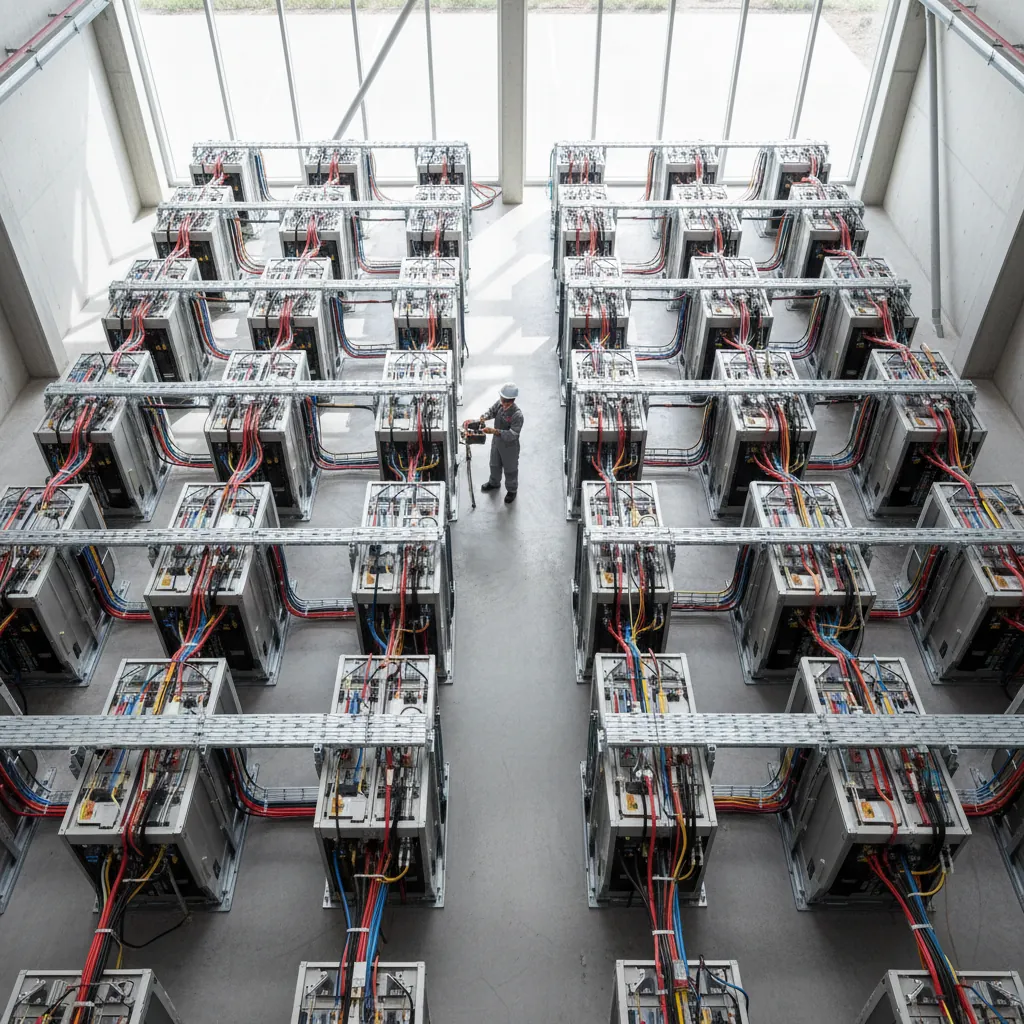
Richmond, BC Industrial BESS Peak-Shaving Case Study
A preliminary engineering analysis for a continuous-production industrial facility: 19 months of 15-minute interval data, a 6,000 kVA demand-management target and a modelled 1 MW / 2.088 MWh behind-the-meter battery configuration.
High sustained demand against a fixed service capacity
The facility operates as a continuous-production industrial plant with a large and stable electrical load. Metered history showed significant demand above the customer's 6,000 kVA target, against an approximately 6.7 MVA service capacity. The objective was to reduce peak utility demand, manage demand charges and protect the site's electrical capacity without disrupting production.
Energy duration, not maximum power, drove the sizing
Sizing a battery from the facility's maximum demand alone would have produced the wrong system. The recorded profile showed sustained daytime peaks, a midday production dip that allows supplementary recharging, and overnight recharging at the site's night base load.
- kW and kvar demand
- Monthly maximum demand
- Power factor
- Contract capacity
- Daily peak duration
- Charging opportunities
- Daily discharge energy
- Battery degradation
- Long-duration discharge needs
BESS configuration
1 MW / 2.088 MWh
- AC power
- 1 MW
- DC capacity
- 2.088 MWh
- Configuration
- 8 × 261 kWh C&I BESS units
- Connection
- 480 V, three-phase
- Application
- Behind-the-meter peak shaving
- Recharging
- Overnight and midday recharging
- Post-peak period
- Standby support after the peak-shaving period
Discharge through the production peak, recharge in the gaps
The operating strategy follows the plant's own rhythm: discharge across the morning-to-afternoon peak period, use the midday production dip for supplementary recharging, recharge overnight at the night base load, and hold the remaining capacity as standby support after the peak-shaving window.
Peak discharge
Battery discharges through the sustained daytime demand period to hold metered demand below the target.
Midday recharge
The production dip provides a supplementary recharge window without adding a new peak.
Overnight recharge
Recharging at the site's night base load restores capacity for the following operating day.
Assessed against the site's own criteria
The recommended configuration was assessed against the facility's measured demand history under the analyzed operating scenario. These are simulation results on historical data.
100% coverage
Under the stated scenario, the modelled system achieved full coverage against the approximately 6.7 MVA service capacity criterion.
54% full coverage
Full coverage of the 6,000 kVA target across 54% of the analyzed operating periods, with demand above the target reduced for the remainder.
What this analysis does not claim
- 01Coverage figures are modelled results from a historical simulation, not measured operating performance of an installed system.
- 02Results are specific to this facility's load profile, service capacity and operating strategy, and will differ for other sites.
- 03No incentive, demand-charge saving, payback or return on investment is represented or guaranteed.
- 04Battery degradation, availability and maintenance affect long-term performance and were treated as design considerations rather than fixed outcomes.
- 05Any utility incentive eligibility or approval is determined by the applicable utility under its current program requirements.
- 06Facility and customer details are not disclosed.
How a project like this proceeds
- 01Confirm the measurement basis on the current rate schedule and bill.
- 02Verify service capacity, protection and the intended point of connection.
- 03Define the control and dispatch strategy, including any reserve commitments.
- 04Develop the equipment, electrical and integration scope for budgetary review.
- 05Screen the project against current utility program requirements before purchase.
Request a BESS Assessment
Send available interval load data and a recent electricity bill. We will review the load profile and develop a sizing and operating strategy around how your facility actually operates.