
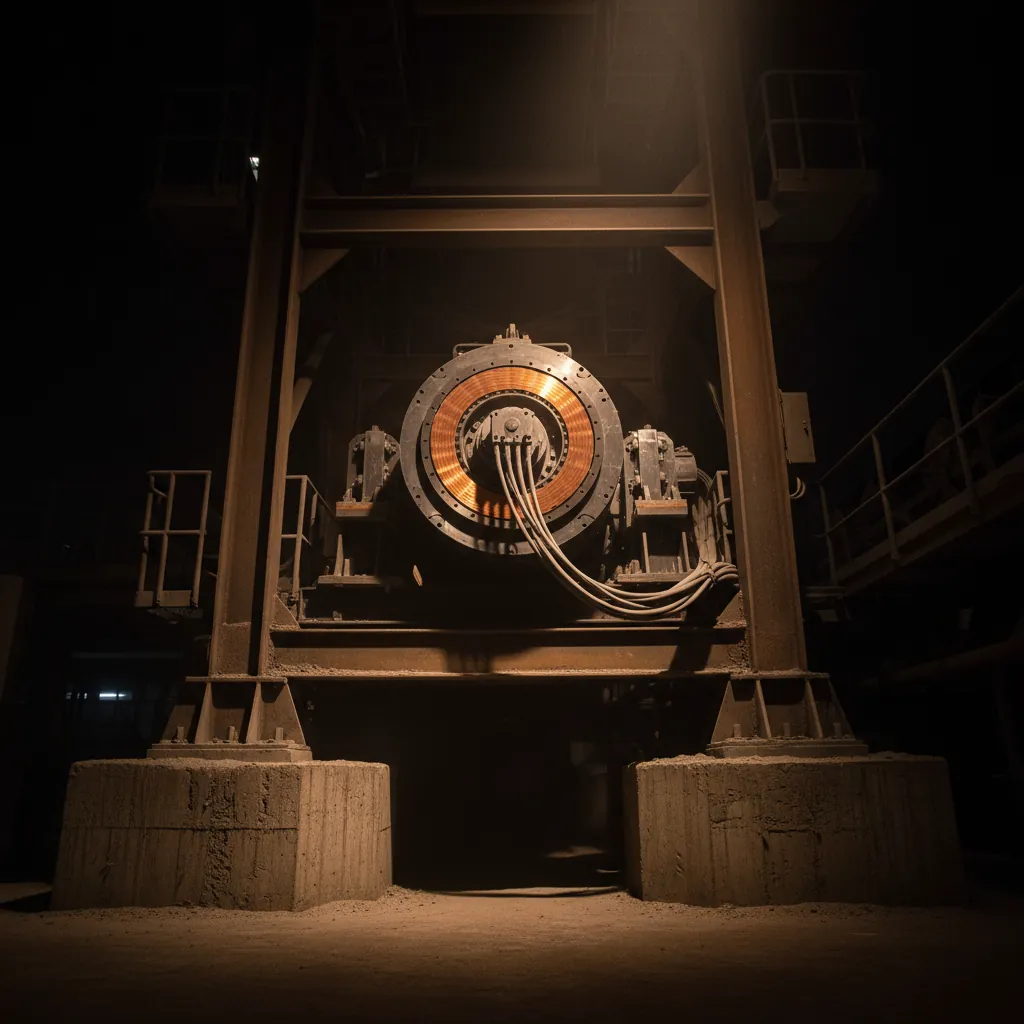
Conveyor Drive Systems for Heavy Industry
Belt conveyors are the clearest case for permanent magnet direct drive: continuous duty, high torque at low speed, and a drivetrain whose gearbox, couplings and lubrication systems carry most of the maintenance burden. This page covers how direct drive is applied to conveyor systems and how a retrofit is assessed.
What determines whether direct drive suits a conveyor
Direct drive is not automatically the right answer for every belt. These are the factors that decide it, in the order they usually get examined.
How an existing conveyor drive is assessed
Most conveyor enquiries concern equipment that is already running. The assessment is a data exercise before it is an equipment selection.
- STEP 01
Collect duty data
Belt width and length, lift, design and actual tonnage, pulley diameter, belt speed, drive count and current motor and gearbox ratings.
- STEP 02
Review the mechanical envelope
Existing drive base, shaft arrangement, guarding, access for installation and lifting constraints at the drive head.
- STEP 03
Review the electrical supply
Available voltage, existing starters or drives, cable routing, drive room capacity and control system interface.
- STEP 04
Define the drive arrangement
Select shaft-mounted, drum-motor or foundation-mounted configuration with the matching variable frequency drive and control scope.
- STEP 05
Plan the changeover
Sequence the work against a shutdown window, including removal, mounting, cabling, commissioning and operator handover.
- STEP 06
Commission and support
Drive parameterization, load sharing between drives, protection settings, functional testing and post-startup technical support.
Where a retrofit is usually worth examining
- Repeat gearbox or coupling failures on a critical belt
- Drive heads that are difficult or costly to access for maintenance
- Conveyors where unplanned downtime interrupts the production chain
- Sites reducing oil handling, oil storage and lubrication routines
- Planned drivetrain replacement or capacity change already in budget
Where the existing drivetrain may be the better option
- Short, intermittent or lightly loaded conveyors
- Drive heads with no space or structure for a different arrangement
- Sites with no capacity to add or support variable frequency drives
- Equipment scheduled for replacement or relocation in the near term
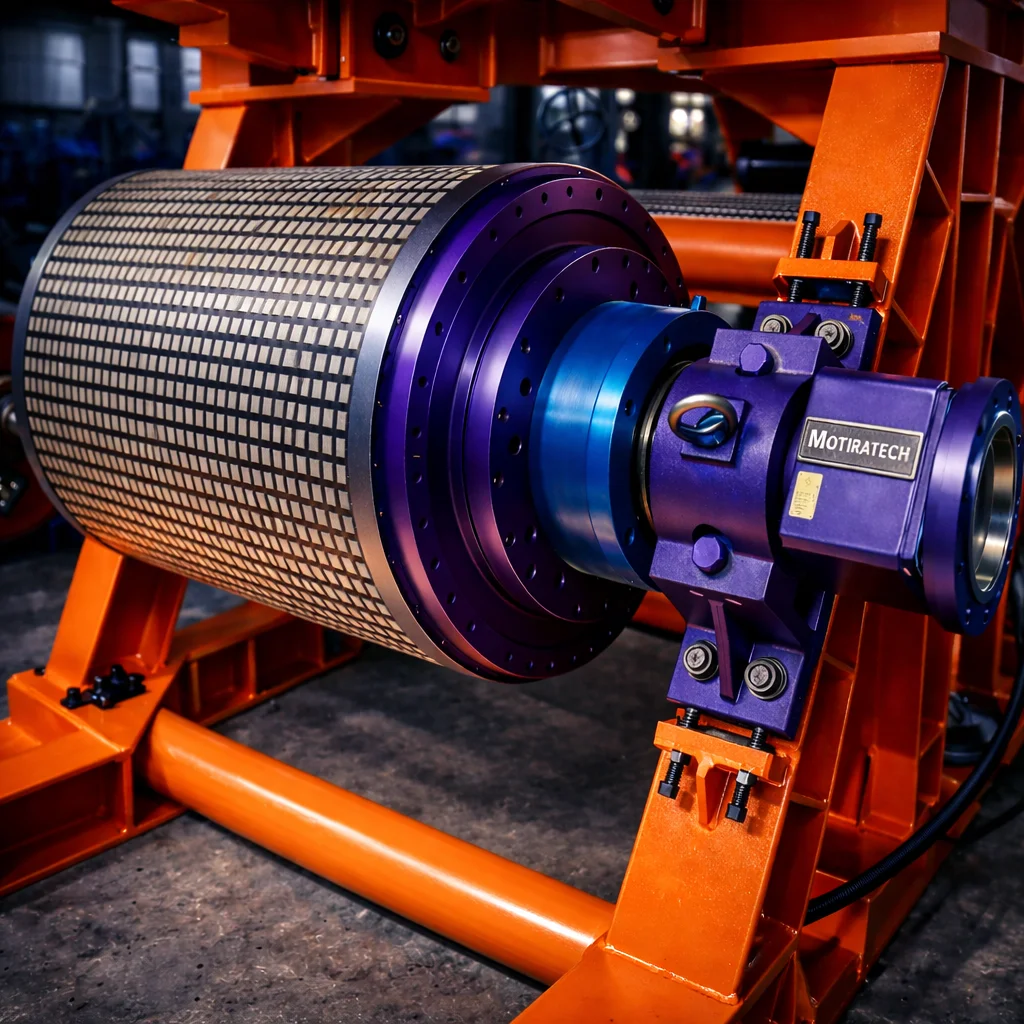
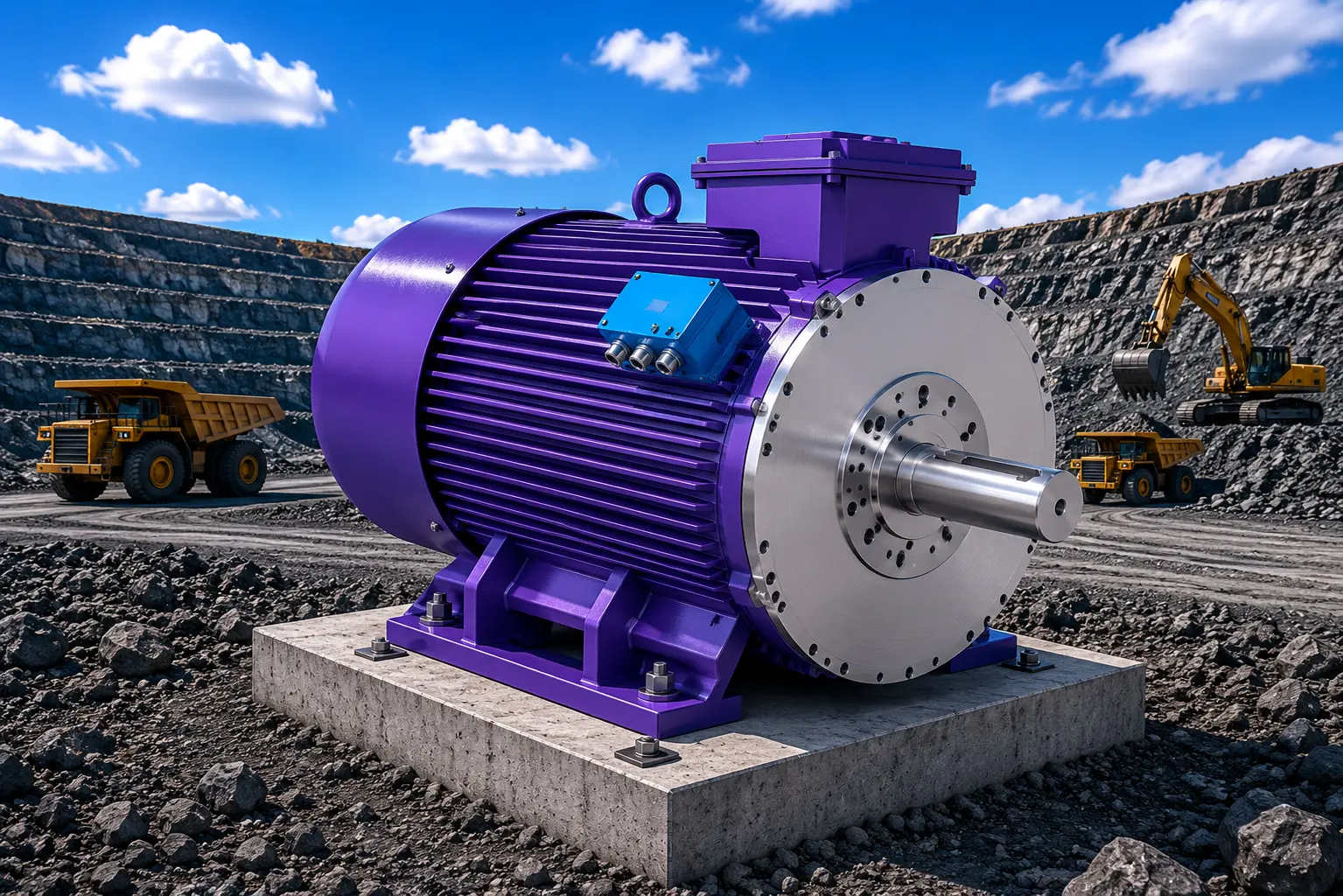
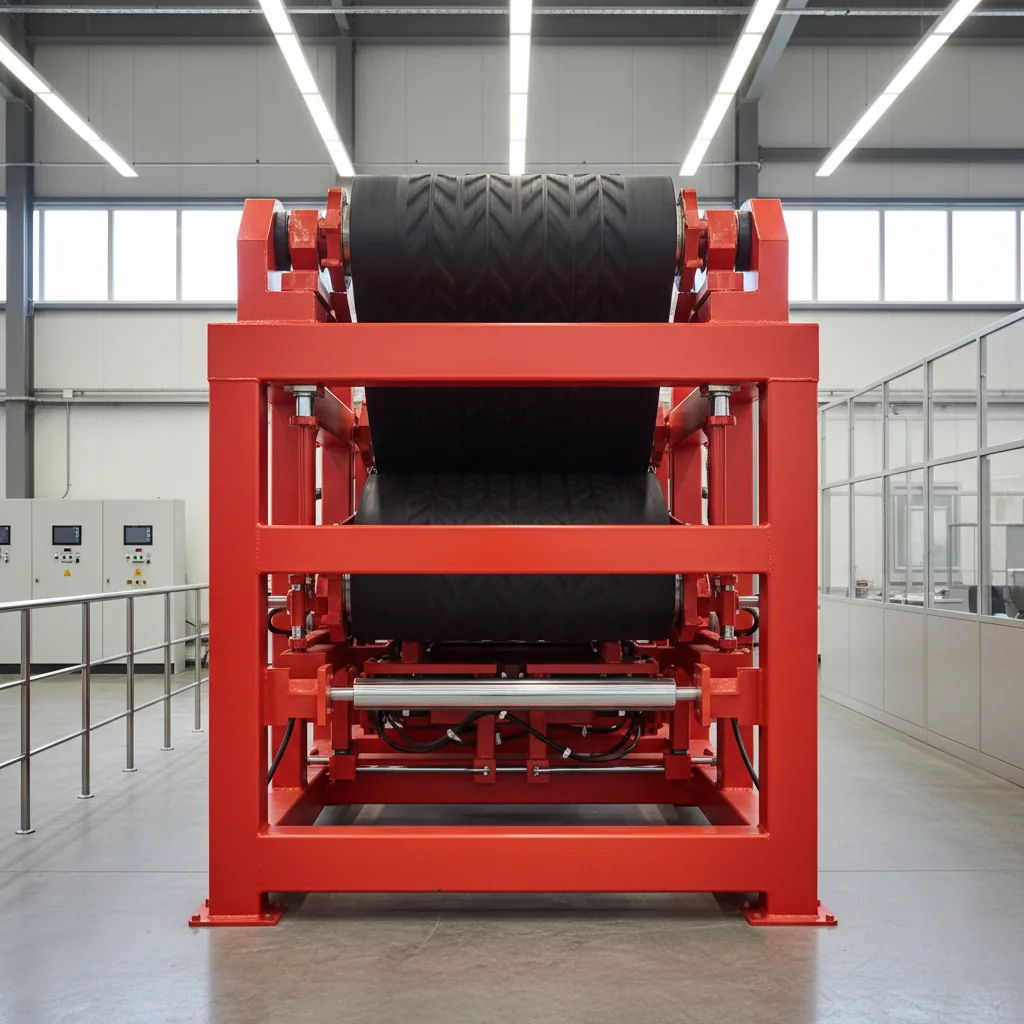
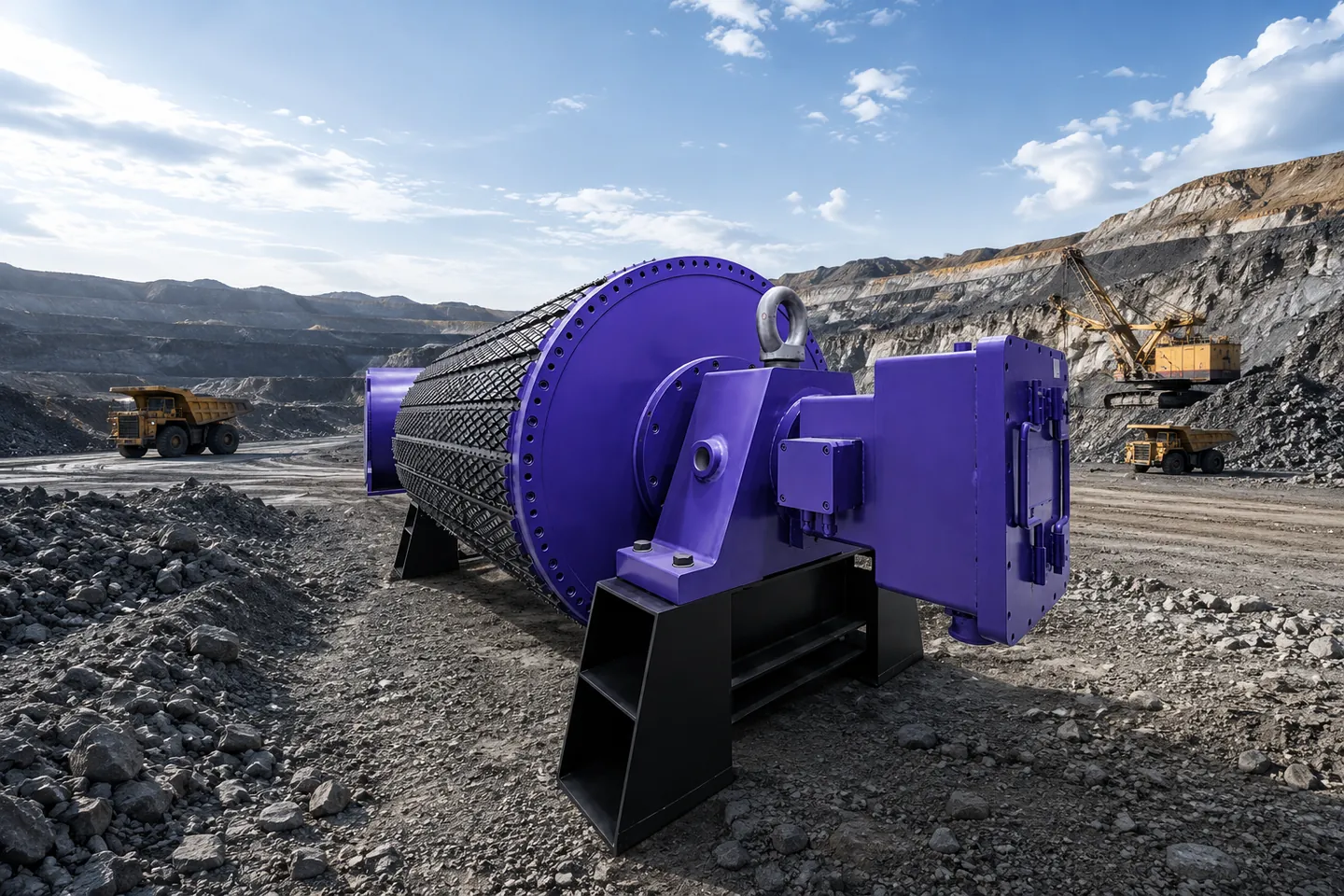
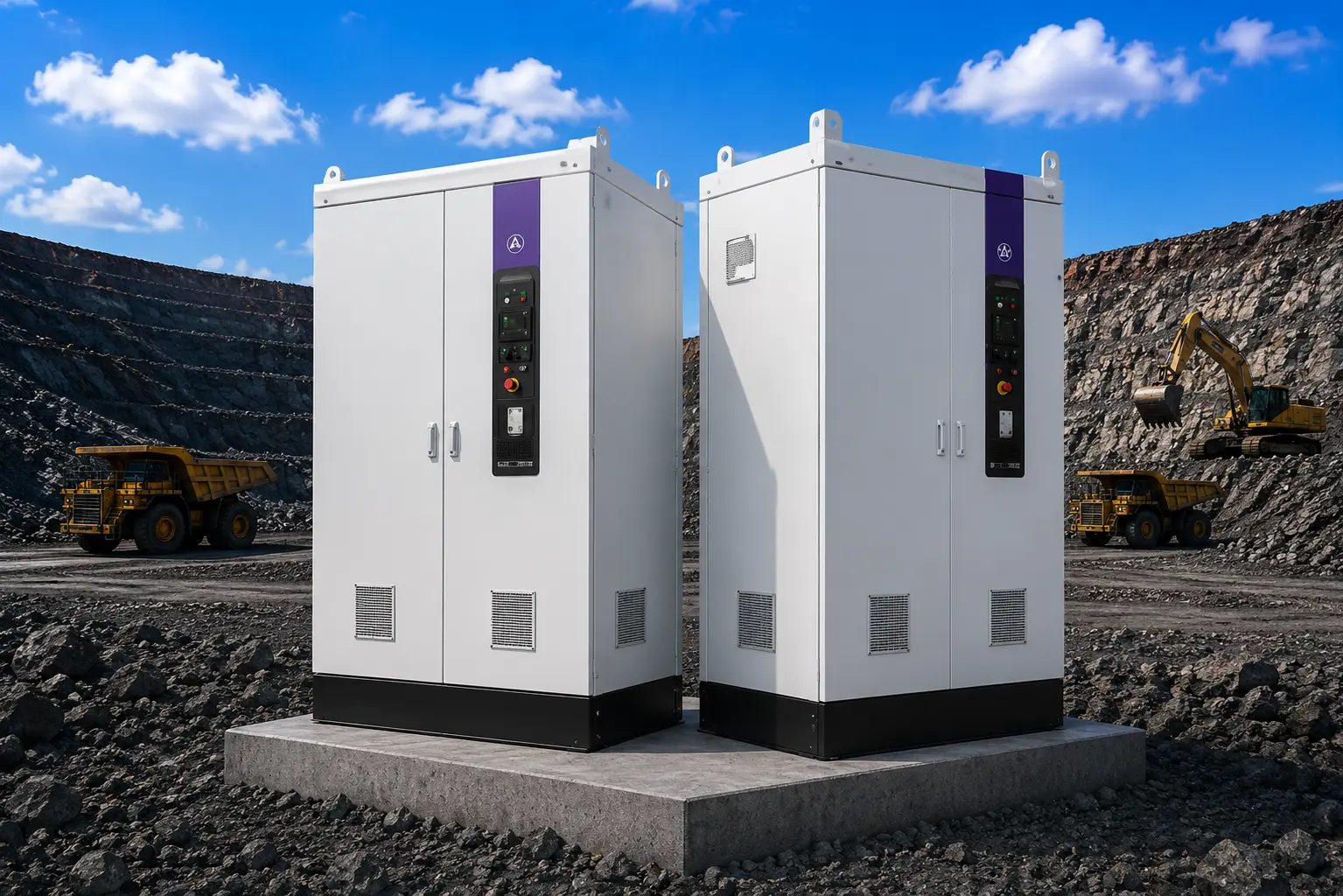
Direct drive arrangements used on conveying equipment
Terms used for the same architecture
Conveyor drive terminology varies between sites, suppliers and regions. These terms describe the same underlying arrangement.
- Direct drive conveyor
- A conveyor drive where the motor turns the pulley directly, with no speed-reducing gearbox in the drivetrain.
- Gearless conveyor drive
- The same architecture described from the removed component: the gear reducer is eliminated rather than replaced.
- Drum motor / motorized pulley
- An arrangement where the motor is integrated into the drive pulley assembly itself.
- Shaft-mounted direct drive
- A motor mounted onto, and torque-arm restrained against, the existing pulley shaft.
- Retrofit
- Conversion of an operating conveyor from a motor-and-gearbox drivetrain to a direct drive arrangement, usually within a planned shutdown.
Where to go next
Permanent magnet direct drive systems
Motor configurations, technical data and integration scope for direct drive systems.
What is permanent magnet direct drive?
The drivetrain architecture explained, and how it differs from a motor-and-gearbox arrangement.
Mining industry solutions
How conveyor drive work fits alongside energy storage and field engineering at mining operations.
Direct drive vs. gearbox conveyor drives
A comparison of the two drivetrain architectures and what has to be measured before choosing between them.
Commissioning and field support
Installation support, drive commissioning and continuing technical assistance for conveyor drive equipment.
Bulk material handling and other sectors
Ports and terminals, cement and aggregates, pulp and paper, steel.
Send the belt data and we will tell you whether direct drive fits
Belt length, lift, tonnage, pulley diameter, belt speed and existing drive ratings are enough to begin a technical review.