
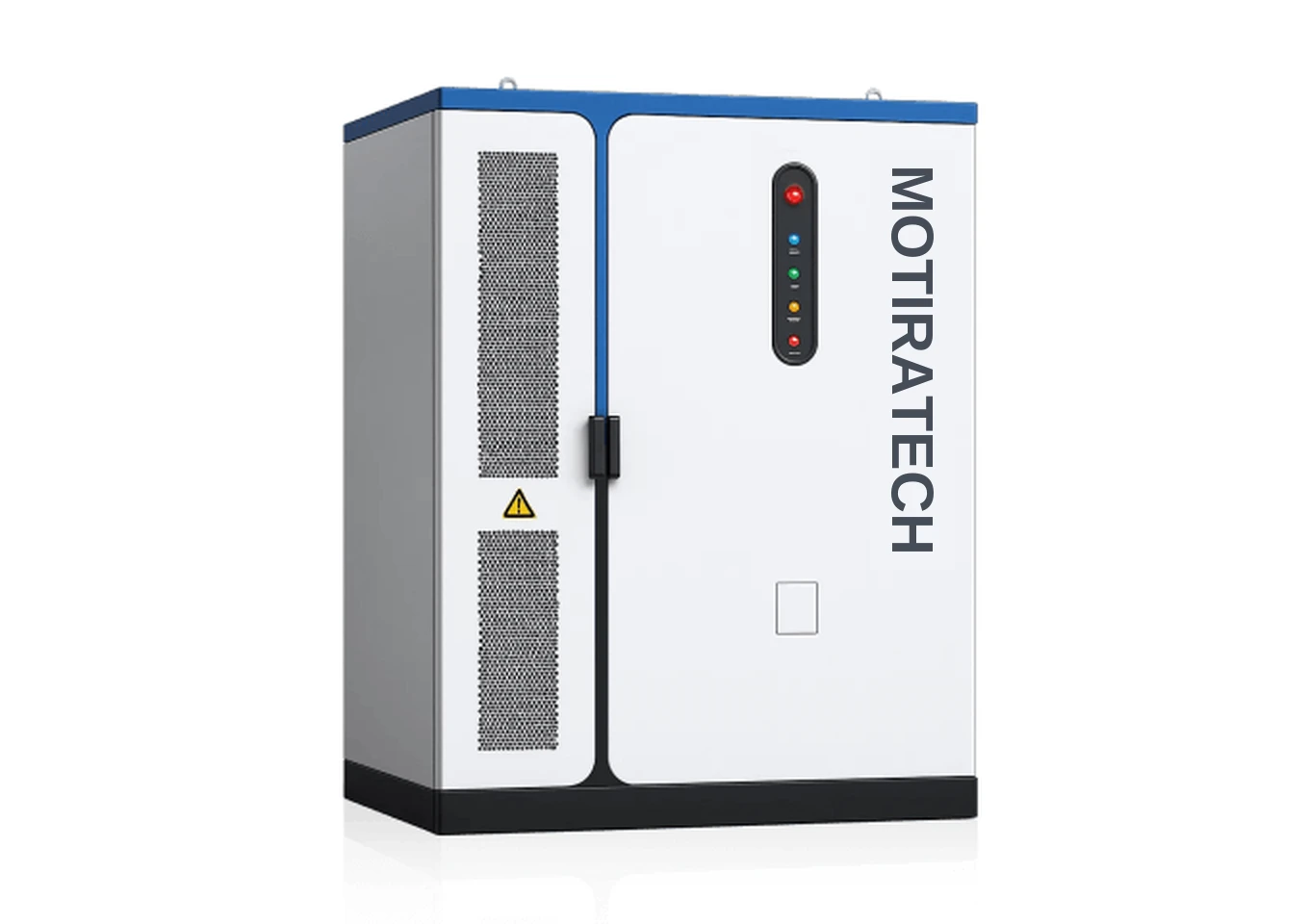
Commercial and industrial battery storage designed around facility data
MOTIRATECH evaluates BESS for commercial buildings, manufacturing plants, warehouses, logistics operations and other energy-intensive facilities where peak demand, resilience, demand flexibility or energy management require a project-specific solution.
Where C&I storage is evaluated
A battery system is sized from how the facility actually operates, not from the building category alone.
Commercial buildings
Storage evaluation for high-demand building loads, resilience needs, EMS integration and utility-program review.
Manufacturing facilities
BESS sizing around production schedules, peak demand, service capacity and electrical infrastructure.
Warehouses and logistics
Energy storage for recurring load peaks, charging loads, backup requirements and site energy management.
Energy-intensive businesses
Project-specific assessment for facilities where demand charges, power quality or resilience justify deeper review.
Information required before sizing
The technical review connects utility data, electrical infrastructure and operating objectives into a storage basis.
- Utility
- BC Hydro or other serving utility, rate class and account context
- Load profile
- Interval load data where available, monthly demand and recurring peaks
- Electrical service
- Voltage, service capacity, transformer and switchgear arrangement
- Operating objective
- Demand management, resilience, backup power, solar integration or demand flexibility
- Site basis
- Indoor/outdoor location, footprint, fire access, permitting and installation constraints
- Timeline
- Assessment stage, budget planning, procurement window and target commissioning period
Utility incentive considerations
Utility programs can change the economics of a storage project, but they are screened separately from the engineering basis.
- Incentives depend on customer eligibility as defined by the utility.
- Rate classification affects whether a program applies to the account at all.
- Technical requirements — metering, communications, non-export operation — must be met by the installed system.
- Utility approval may be required before equipment is purchased or installed.
- Project economics should not assume an incentive until the utility confirms it.
View the BC Hydro Energy Storage Incentive
Eligibility criteria, calculation methods, demand-flexibility requirements and an incentive estimator for battery storage projects in British Columbia.
Demand management, resilience and flexibility
Commercial and industrial storage may be assessed for peak shaving, backup power, solar shifting, demand flexibility and site energy management, depending on the facility profile.
Peak demand management
How storage can act on recurring demand peaks and demand-related electricity costs.
BESS systems
Core BESS engineering, products, incentives, project delivery and assessment form.
EPC & Integration
Engineering, installation coordination, EMS integration and commissioning.
Evaluate storage from your facility data
Send the utility, load profile, project location and operating objective. MOTIRATECH can review whether BESS is technically suitable for the facility.