
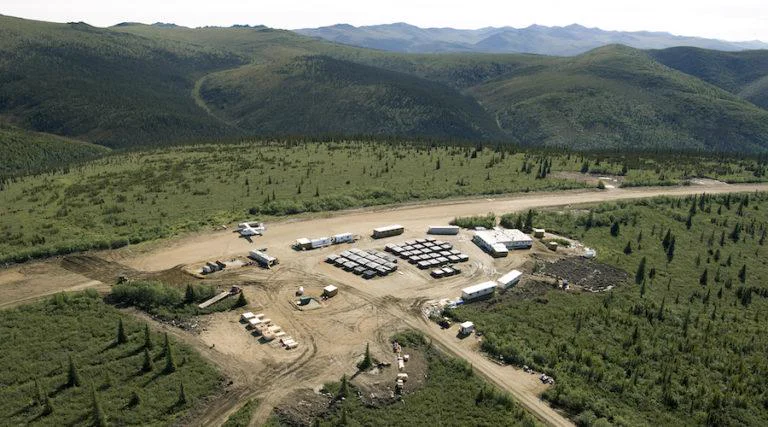
Start with the electrical connection, not the battery enclosure
Grid-connected and remote-site storage can use similar battery technology, but they answer different operating questions. A connected industrial facility may seek to reduce billed peak demand or shift energy use. An isolated site must first ensure that its local generation and storage can supply the loads reliably. A battery stores energy; it does not replace the need for a sufficient source of charging energy.
Remote does not necessarily mean off-grid. A mine or camp may have a utility connection with constrained capacity or reliability. That weak-grid case needs both the utility-interface assessment and a local-supply strategy. The distinction is the site's actual connection and operating requirements, not its distance from a city.
Grid-connected BESS: match dispatch to the tariff and load profile
Behind-the-meter storage may discharge during site peaks and recharge at other times. Whether this reduces a bill depends on the applicable tariff, how billed demand is calculated, and whether the battery can cover the relevant peaks. Energy shifting has value only where the price structure and operating constraints support it; it should not be assumed for every Canadian utility rate.
Assessment therefore starts with bills and interval load data, followed by a dispatch model. Charging can create a new peak if it is not controlled. Savings estimates should account for conversion losses, auxiliary consumption, available capacity over time and competing uses of the battery. Utility connection requirements and export restrictions must be checked separately from the economic model.
Remote and off-grid BESS: design around the whole supply system
At an isolated industrial site, the battery operates with generators, renewable generation or both. Storage can absorb surplus renewable output, support changes in load and allow different generator operating schedules where the integrated system supports them. Any reduction in fuel consumption or generator runtime is site-specific, not an inherent or guaranteed percentage.
The assessment needs time-series loads and generation, seasonal resource availability, generator operating limits, reserve requirements and the acceptable interruption duration. Motor starting and sudden process-load changes require review of inverter transient capability as well as battery capacity. A controller must coordinate the equipment rather than treating storage as an independent add-on.
Peak shaving is not the same as backup or islanding
A grid-connected BESS configured for bill management does not automatically supply a building when the utility fails. Backup requires suitable switching, protection, controls and a defined critical-load arrangement. Equipment intended only to follow a grid reference should not be assumed to establish an isolated network.
Intentional island operation requires a source capable of establishing voltage and frequency, coordinated protection, and a controlled transition and reconnection sequence. Black start—the ability to restore a de-energized local system—is a separate capability to specify and test. These requirements also matter at permanently off-grid sites, where there is no utility supply to support recovery.
Size kW, usable kWh and operating reserve separately
Power determines how much load the conversion equipment can support at a moment in time; usable energy determines how long it can do so. Neither a cabinet nameplate nor a nominal storage duration demonstrates that a site requirement is met. Sizing should use the relevant load events, charge/discharge limits, state-of-charge reserve, equipment losses and expected capacity degradation.
A grid-connected site may reserve energy for an outage while also using it for peak reduction. An off-grid site may reserve energy for generator startup or unexpected load changes. Those objectives can compete. The dispatch model should show what happens when peaks recur, renewable output is low, or a generator is unavailable—not only a favourable operating day.
Canadian site conditions change the integration plan
For both applications, review the equipment's permitted temperature range, thermal management, environmental exposure, electrical protection and fire-safety provisions against the actual site and local requirements. At remote sites, auxiliary heating and cooling loads, transport dimensions, lifting access, seasonal delivery windows, communications and spare-parts availability also belong in the design.
A project review should identify who handles engineering, licensed electrical work, permitting, commissioning and maintenance. Product documentation and the applicable authority requirements govern the final arrangement. A battery product suitable for grid-connected dispatch should not be represented as off-grid or black-start capable without verifying its conversion equipment and control configuration.
What to provide for a meaningful comparison
For a connected site, provide the utility rate, recent bills, interval data, electrical single-line diagram and any critical-load requirements. For a remote site, add the generator inventory, operating records, renewable data if available, seasonal load pattern, fuel-delivery arrangements and access constraints. Use these inputs to compare feasible configurations against the same service requirement.
- Define the objective: demand reduction, continuity of supply, renewable integration or a combination.
- Identify the connection: grid-connected, weak-grid or permanently off-grid.
- Specify critical loads, required duration, acceptable interruptions and recovery expectations.
- Compare lifecycle costs and operating constraints without assuming a fixed payback or fuel-saving percentage.