Where direct drive changes the maintenance picture on a conveyor
A permanent magnet direct drive removes the reducer stage from the power path. That single architectural change is what alters the maintenance scope on a conveyor.
A conventional conveyor drive converts motor speed to pulley speed through a gearbox. The reducer brings its own couplings, alignment interfaces and gear-oil system, and each of those is a service item with its own inspection interval and its own failure modes.
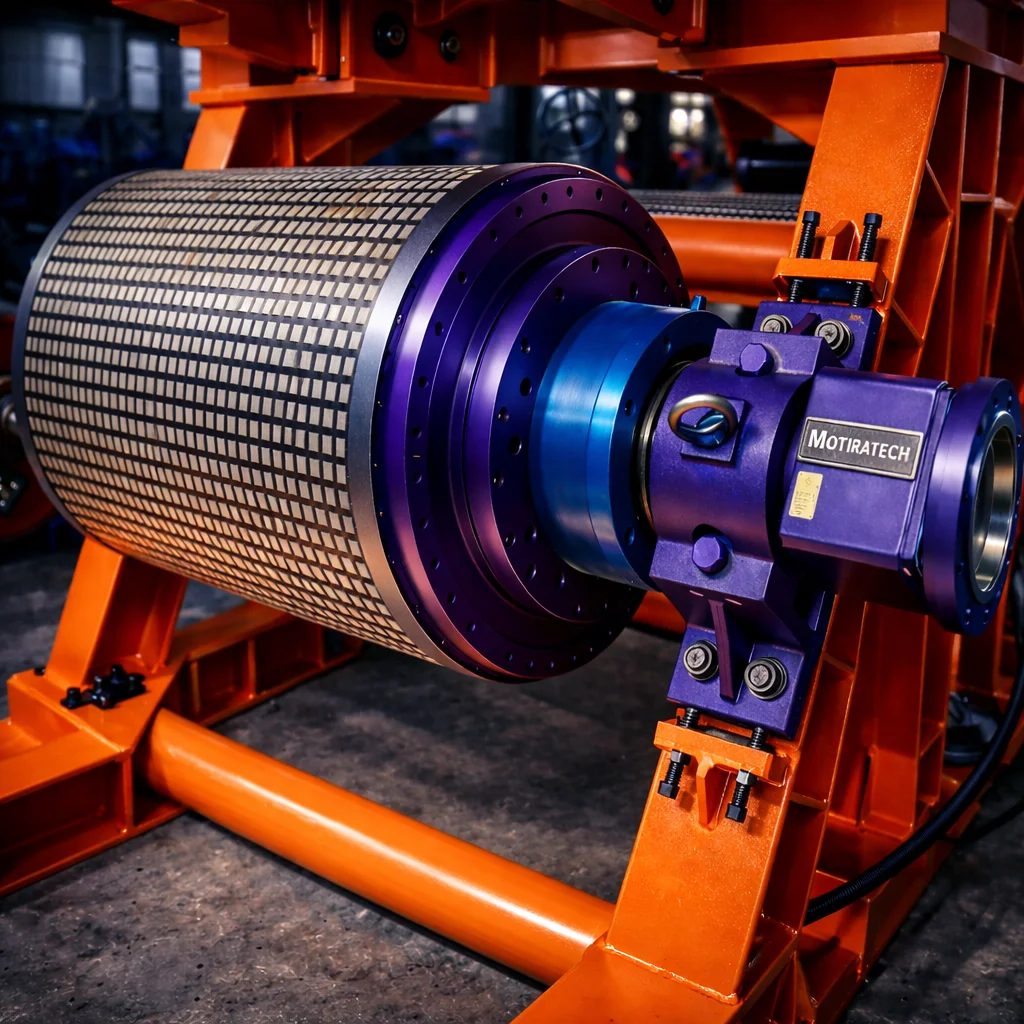
A permanent magnet direct drive removes that stage. The motor is wound with a high pole count so it develops torque at the speed the pulley actually turns, and the drive is controlled electrically rather than geared mechanically. What remains in the power path is the motor, its mounting arrangement and the drive cabinet.
The practical consequence is narrower: fewer rotating interfaces to align, no gear-oil system to sample, change and contain, and fewer mechanical wear paths to plan around. Whether that produces a measurable change at a given site depends on the duty, the access conditions and the existing maintenance programme — which is why we review the application data before making any selection.
Further reading: our PMDD solutions page sets out the engineering principles, the retrofit and new-build pathways, and the application information required for a drive review.