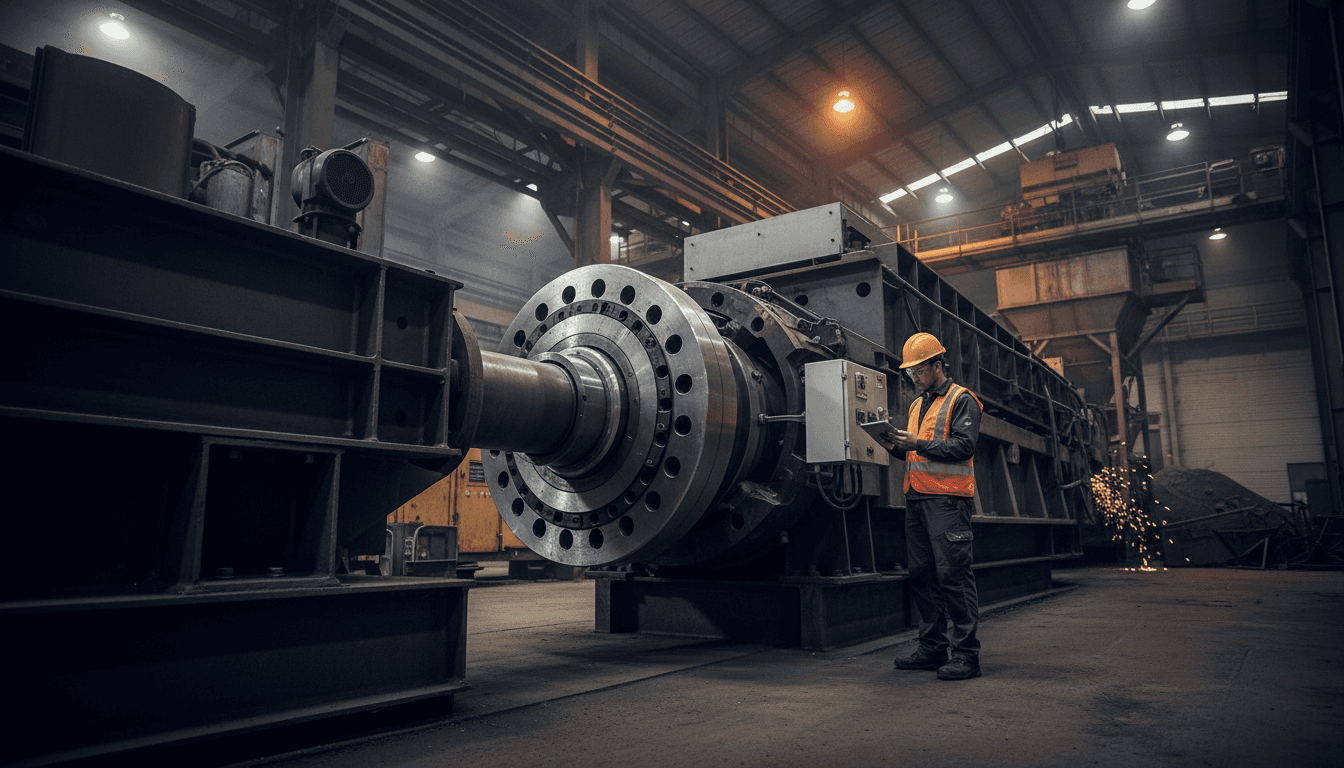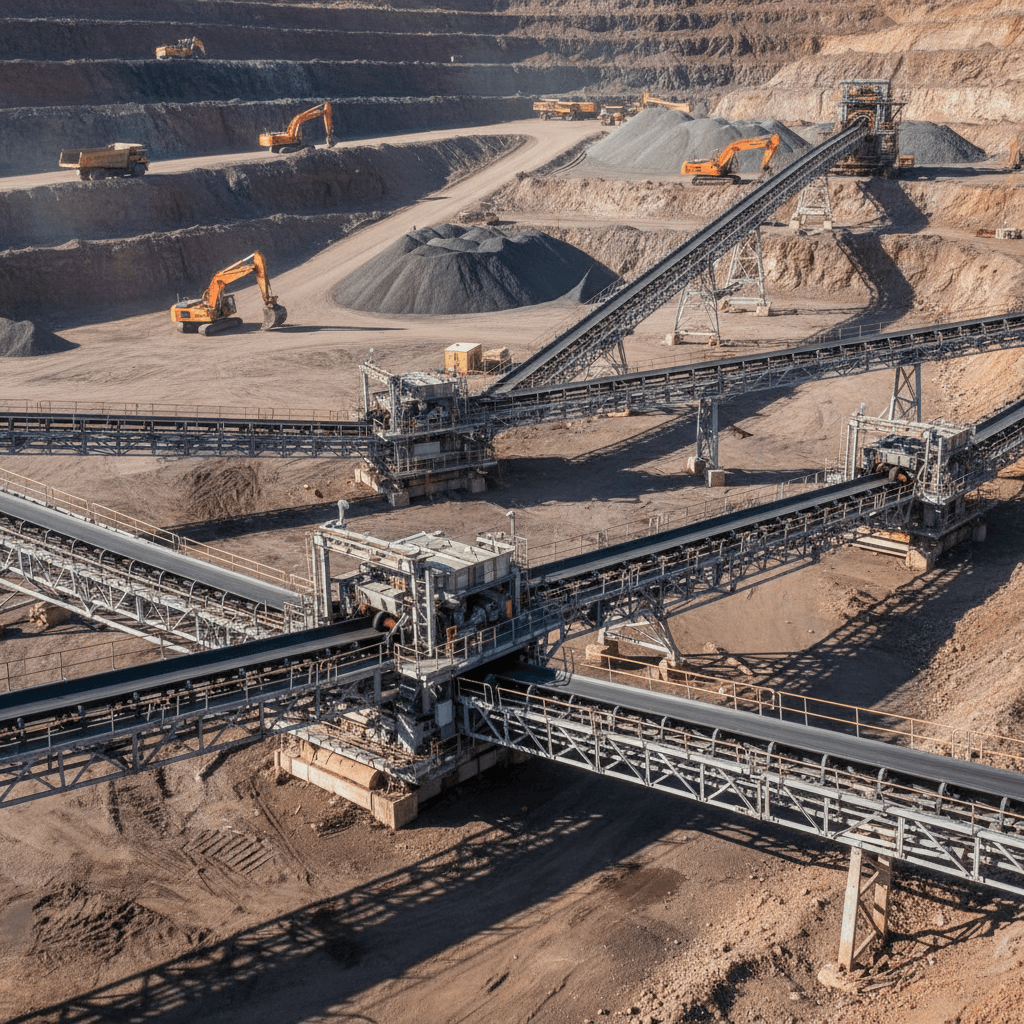
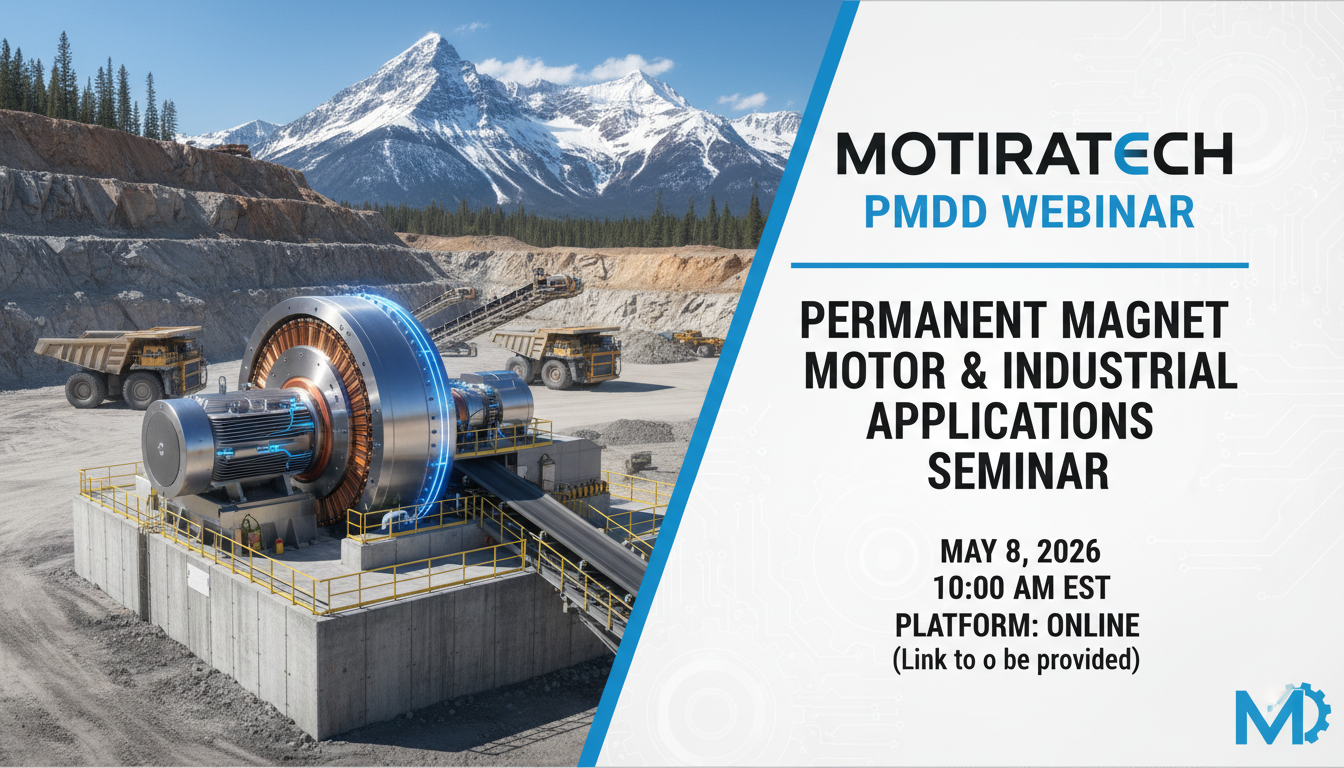
A PMDD motor Africa mining harsh environment solution improves reliability and energy efficiency by eliminating failure-prone gearboxes and reducing maintenance requirements. These direct drive systems are specifically engineered to withstand extreme temperatures and dust contamination, ensuring consistent productivity in remote gold and copper operations.
When your conveyor drive fails 200 meters underground in Zambia's Copper Belt, the cost is never just the repair bill. It is the halted production, the emergency freight for components that may take weeks to arrive, and the cascading risk to worker safety in extreme heat and dust conditions that conventional drive systems were simply never engineered to withstand. For mining operations across sub-Saharan Africa, these failures are not edge cases; they are a predictable pattern rooted in the fundamental design limitations of traditional geared drive systems. In this article, we break down exactly why African mining environments destroy conventional drives, how Permanent Magnet Direct Drive technology eliminates those root causes, and what real-world performance looks like across both underground copper and surface gold operations.
Why African Mining Environments Break Conventional Drive Systems
African mining sites do not stress drive systems the way other regions do. They dismantle them systematically, through a combination of stressors that interact and compound in ways conventional equipment was never designed to handle.
In the West African gold belt, ambient temperatures regularly exceed 45C at surface level. At those temperatures, lubricant viscosity breaks down faster than maintenance schedules account for, accelerating bearing wear and shortening gear oil service intervals dramatically. This is not a seasonal anomaly in Ghana, Burkina Faso, or Mali; it is the baseline operating environment for months at a time.
Dust compounds the thermal problem. Silica-laden particulate from blasting, crushing, and hauling operations infiltrates mechanical systems through seal interfaces that perform adequately in temperate conditions but fail progressively under the fine, abrasive particle loads typical of African operations. The consequences are documented and severe: a conveyor gearbox operating under these conditions suffered complete bearing collapse after just 1,200 hours when gear oil silica contamination reached 3.2%. That is roughly six weeks of operation before catastrophic failure.
In Zambia's underground copper mines, continuous blasting introduces a further variable. Shock loading and structural vibration contribute to conveyor belt misalignment events and accelerate mechanical wear across rotating components beyond what surface operations face.
Underlying all of this is the logistics reality. Parts that take days to source in North America can take three to six weeks to reach a remote site in the DRC or northern Burkina Faso. Every failure event carries a compounding cost that operators in other regions simply do not encounter. This is the operational context that makes the case for PMDD motor Africa mining harsh environment applications so direct and measurable.
The Gearbox Problem: How Heat, Dust, and Distance Combine to Create Failure Cascades

What the previous section describes as an operating environment, gearbox engineers would recognize as a systematic dismantling of every assumption built into conventional drive design. The failure mechanisms are not random. They follow a predictable cascade, and African mining conditions accelerate each stage.
The first mechanism is thermal lubricant degradation. Multi-stage gearboxes are engineered around lubricant viscosity specifications that hold within defined temperature bands. When ambient temperatures push past 45C at surface, as they routinely do across the Sahel gold belt, gear oil viscosity breaks down faster than service intervals are designed to handle. Thinner oil means reduced film thickness between gear teeth and bearing surfaces, which means metal-on-metal contact begins incrementally and accelerates. Bearing wear that might take years in a temperate climate can develop in months.
The second mechanism is dust ingress. Gearbox sealing systems that perform adequately in controlled environments are progressively overwhelmed by fine silica particulate. The documented outcome is concrete: gear oil silica contamination at 3.2% produced complete bearing collapse at 1,200 hours. That figure represents a system that failed before its first scheduled overhaul.
The third mechanism is the one that transforms a mechanical failure into a production crisis: logistics. A gearbox failure at a site in northern Ghana or rural Zambia does not resolve in days. Replacement components typically require three to six weeks to source and transport. Gear maintenance activities account for up to 5% of original investment costs even under favorable conditions; in African contexts, that figure carries the additional weight of extended downtime costs that North American or European operations simply do not face.
Research from Burkina Faso gold mine operations confirms that heavy equipment downtime in these environments is structurally different, not just operationally worse. Equipment availability functions as one of the largest financial levers in the entire operation. Reactive maintenance has become the operational default across many African mines, not by choice, but because the predictive monitoring infrastructure required to catch failures early has not been present. That absence is precisely what makes the architecture of the drive system itself so consequential.
How PMDD Architecture Eliminates the Root Causes of Drive Failure in Extreme Conditions
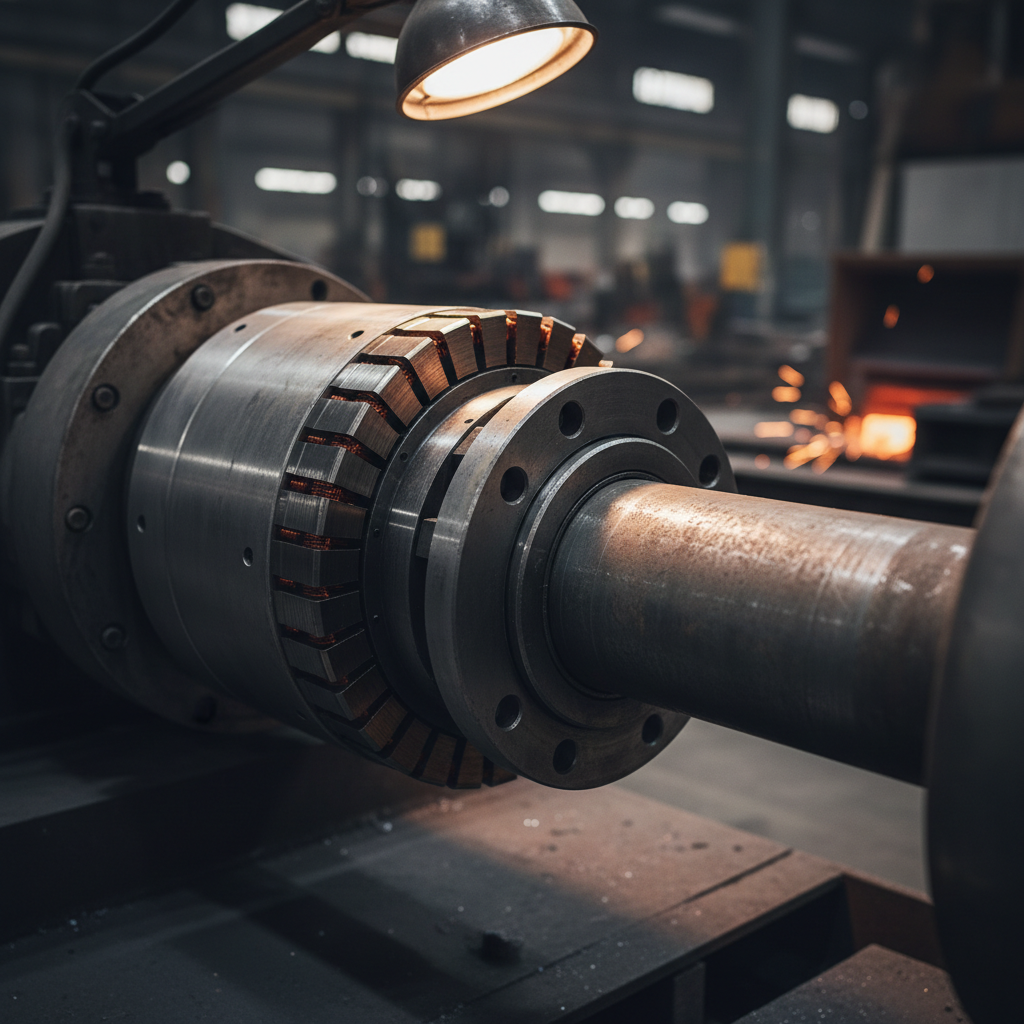
That absence of predictive infrastructure is precisely why the architecture of the drive system itself has to carry more of the reliability burden. In African mining contexts, the machine cannot depend on the maintenance ecosystem around it. It has to be fundamentally harder to break.
PMDD systems address this at the mechanical level, not through better monitoring of the same components that were already failing. The starting point is the elimination of the gearbox entirely. No gearbox means no gear oil, no oil contamination pathway, and no lubrication schedule that has to be recalibrated against an ambient temperature of 47C. The specific failure cascade documented at 3.2% silica contamination cannot happen in a system that has no oil reservoir to contaminate. For an operations manager in Lubumbashi or Obuasi, that translates directly: fewer consumables to stock, one fewer inspection category, and no scheduled gearbox overhaul to plan logistics around.
The component count reduction is not incidental. Fewer rotating components means fewer failure points, and in remote operations where part lead times stretch three to six weeks, every eliminated component is a eliminated procurement risk. Understanding how PMDD motors are engineered makes clear that the permanent magnet rotor design also maintains high torque output at low shaft speeds without the efficiency losses that affect induction motors as winding temperatures climb. At sustained high ambient temperatures, that thermal stability is operationally significant, not just a specification.
Sealed enclosures with appropriate IP ratings manage fine silica dust more effectively than the multi-point sealing systems required across a geared drivetrain, where every shaft interface is a potential ingress point.
The practical comparison is direct. A conventional geared conveyor drive typically requires monthly lubrication checks, seal inspections at approximately 500-hour intervals, and full gearbox overhauls annually. A PMDD installation removes all three maintenance categories from the schedule entirely.
Copper Belt Case: Conveyor Drive Reliability in High-Dust Underground Operations
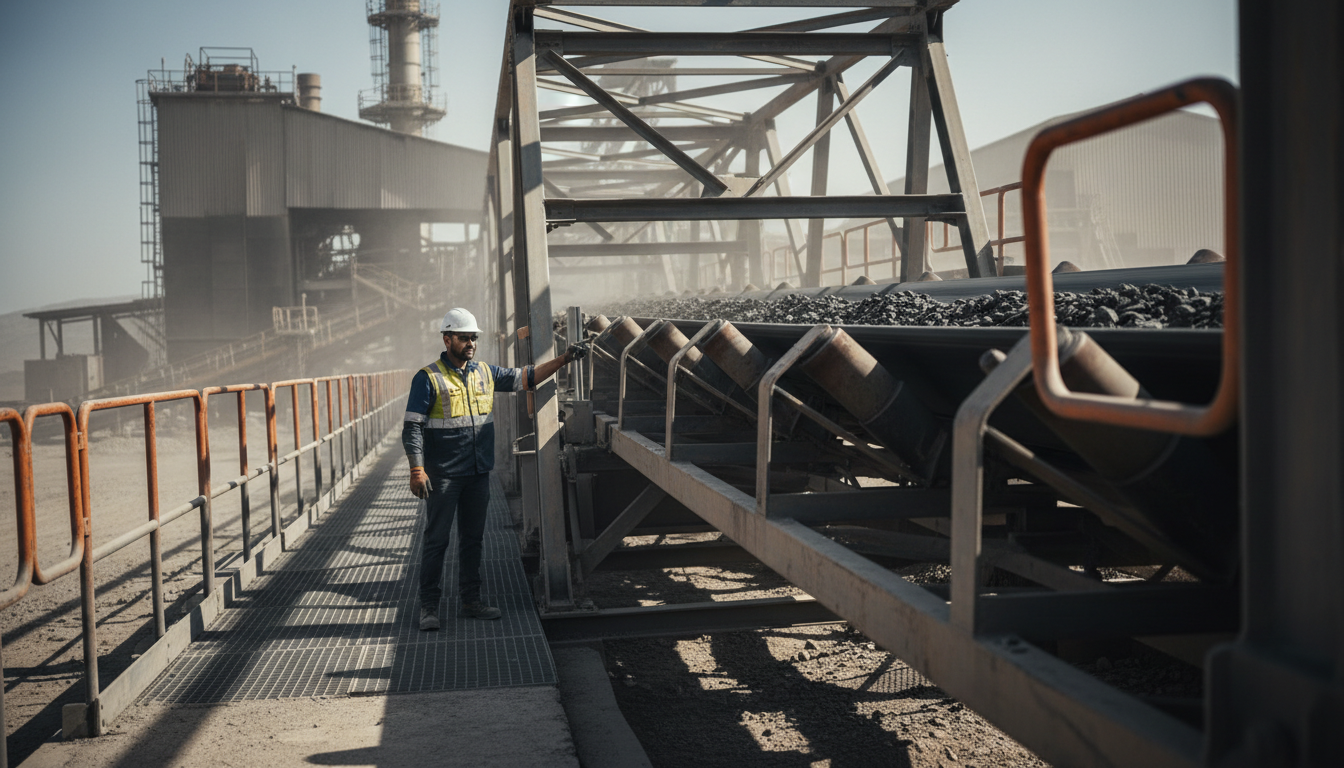
The scenario described here draws on documented operational conditions across the Zambian Copperbelt and the Kamoa-Kakula region in DRC, representing a composite that reflects conditions typical across both areas rather than a single named site.
Consider an underground copper mine running continuous three-shift production, targeting sustained ore throughput in the range of 3,000 to 5,000 tonnes per shift via underground conveyor systems. Blasting occurs around the clock, not as a periodic event but as a continuous operational necessity at depth. That sustained blast loading introduces structural vibration that propagates through conveyor support structures, and the documented outcome at Zambian copper operations is instructive: conveyors lift off their tracking geometry, belt misalignment follows, and when it does, the consequences extend well beyond a belt adjustment. Material spillage, structural damage to idlers and support frames, and the labor required to clear and re-commission the system mean a single misalignment event can halt production for eight or more hours. In an underground environment where haulage continuity is the production bottleneck, that is not a maintenance event. It is a revenue event.
Gearbox-induced misalignment is a specific contributor to this problem. Drive-end torque fluctuations under load, combined with the thermal expansion and contraction cycling that underground heat and blast ventilation create, introduce dynamic forces at the drive head that progressively shift belt tracking. Dust suppression in these environments is challenging enough that fine copper ore particulate infiltrates gearbox seals continuously.
A PMDD drive installation changes the failure geography of this system in practical terms. With no gearbox at the drive head, the category of drive-induced misalignment events is removed entirely. The torque delivery from a direct-drive permanent magnet motor is smooth and consistent, without the load-step behavior that geared systems produce during starts and speed transitions. Restart after a minor interruption, a short blasting-related stoppage or a belt tension check, requires no oil temperature warm-up protocol and no seal inspection before re-engaging.
The spare parts inventory reduction is equally concrete. A geared drive system at a remote underground site requires stocked bearing sets, seal kits, gear oil in climate-appropriate viscosity grades, and coupling components. A PMDD installation reduces that inventory to a fraction of those line items, which matters significantly when the nearest comprehensive industrial supplier is a multi-day logistics chain away.
West Africa Gold Belt Case: PMDD Performance in High-Heat Surface Operations
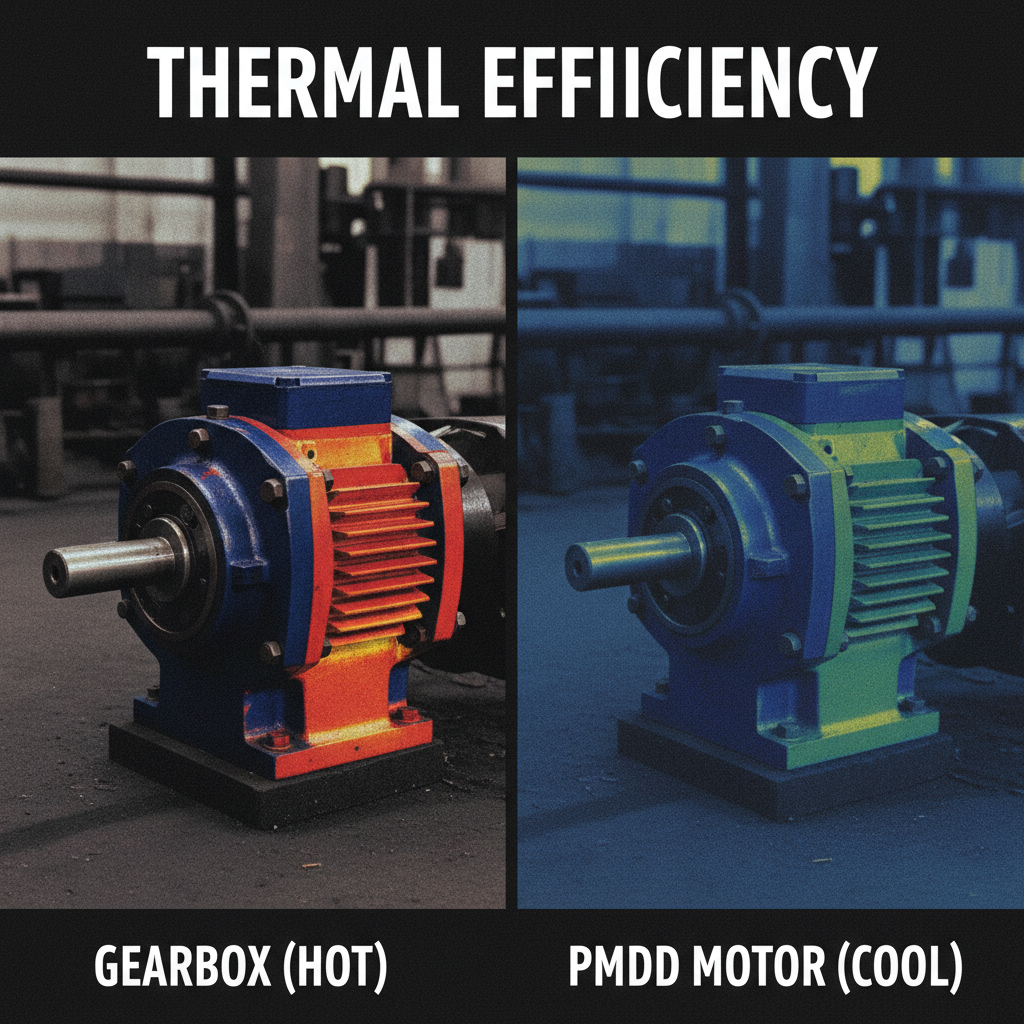
Surface gold mining in the West African gold belt operates under a different failure profile than underground copper, but the consequences of drive system unreliability are just as direct and, in some respects, harder to manage.
Consider a representative gold processing facility in Burkina Faso or northern Ghana, running a surface conveyor system feeding ore from an open-pit crusher to a primary processing circuit. Ambient temperatures at the drive enclosure surface can reach 50C or higher during peak dry season. Wet season brings the opposite problem: rapid humidity cycling that drives condensation into any system with imperfect sealing, accelerating corrosion and electrical insulation degradation. Dust loading from open-pit blasting and truck haulage is continuous and uncontrolled in ways that underground dust suppression systems at least partially address.
For a geared drive in this environment, the thermal problem is structural. Gear oil viscosity specifications are built around temperature bands that West African surface conditions routinely exceed. As viscosity drops, gear mesh geometry, which is precision-machined to operate within defined tolerances, begins accumulating wear that no service interval can fully reverse. Documented maintenance performance analysis from Burkina Faso gold mine operations confirms what operators already know from experience: equipment availability is one of the largest financial levers in the entire operation, and unplanned stoppages compound quickly. At conservative estimates, a single conveyor stoppage in a gold processing circuit costs between USD $15,000 and $40,000 per hour in lost throughput. Across a gearbox failure event that stretches three to six weeks from failure to full recommission, that figure becomes a capital-scale loss.
PMDD motors remove the lubricant degradation pathway entirely. There is no gear oil to thin, no gear mesh geometry to drift under thermal expansion, and permanent magnet windings engineered for high ambient temperatures maintain torque output consistently across the operating range. For operations where remote site infrastructure solutions determine how quickly a recovery can even begin, eliminating the failure category altogether is more valuable than any improvement in response time.
Field Support and Monitoring: Making PMDD Work Without a Local Service Network
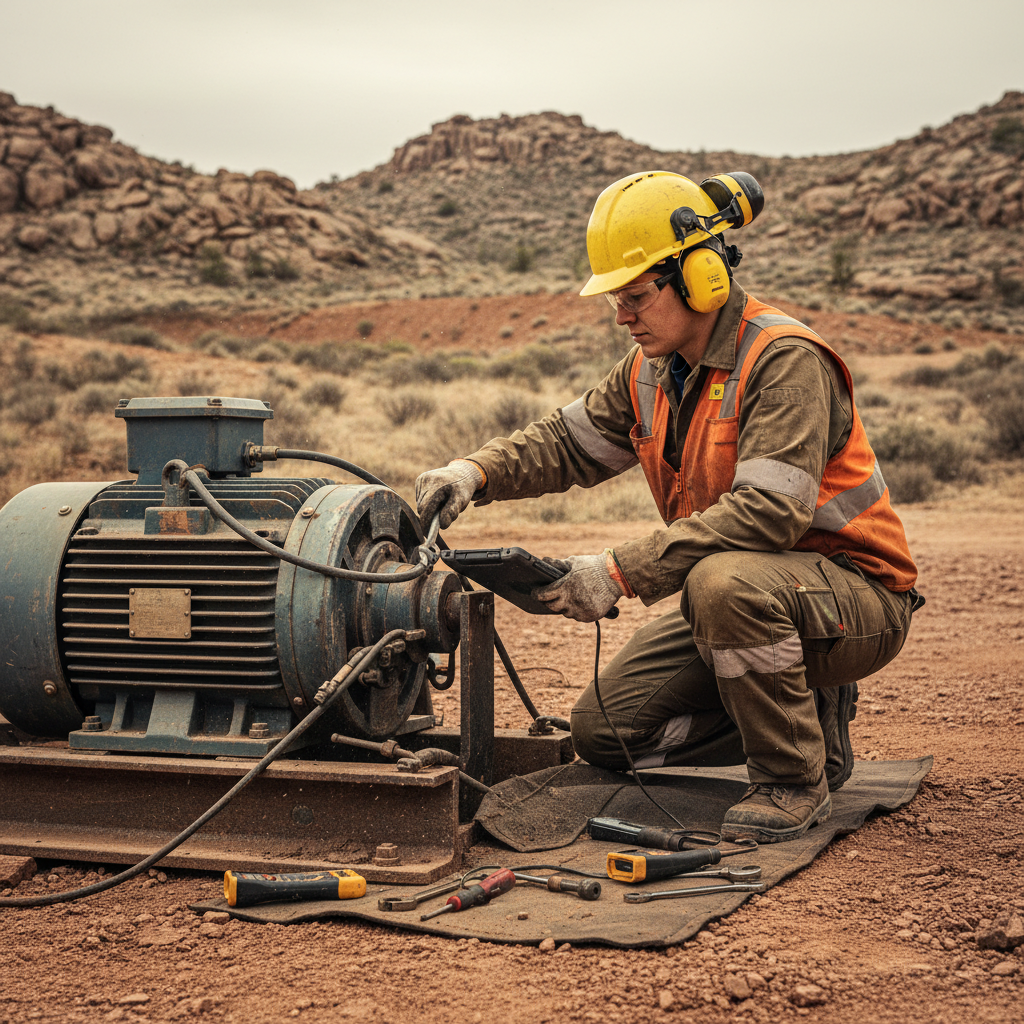
Eliminating the gearbox failure pathway matters enormously, but experienced African mining operators will ask the question that this entire analysis eventually has to answer: who fixes it when something goes wrong at a site six hours from the nearest city?
It is a legitimate question, and one that deserves a direct answer rather than a warranty clause.
The first layer of the answer is condition monitoring. PMDD systems with integrated sensors continuously track vibration signatures, thermal profiles, and winding insulation resistance, the three parameters that give earliest warning of developing faults. Predictive monitoring of this kind detects faults up to 70% earlier than traditional inspection-based methods, which means the difference between scheduling a planned intervention and managing an unplanned stoppage. Alerts transmit to remote support teams who can assess severity, advise on-site personnel, and pre-position parts before a failure event occurs rather than after. That sequence alone changes the logistics problem fundamentally.
The second layer is front-loaded expertise transfer. Field technical support for remote mine sites during initial commissioning is structured specifically to build on-site competence, not to create ongoing dependency. Operators and maintenance personnel who understand the system architecture, and who recognize what normal sensor readings look like, can manage minor interventions confidently without waiting for an external technical team.
The third layer is architectural simplicity. When intervention is required, PMDD systems present a narrower and more predictable scope than gearbox overhaul scenarios. There is no multi-stage disassembly, no oil analysis, and no precision gear mesh realignment. The work is bounded, which means it is manageable with the smaller, multi-role maintenance teams that characterize most PMDD motor Africa mining harsh environment deployments.
Integrating PMDD motors into African copper and gold mining operations provides a significant leap in reliability and energy efficiency. These systems are proven to handle the harshest environments while reducing long-term maintenance costs. If you feel that your facility could benefit from professional support or tailored technical advice, starting with a clear foundation is essential. We invite you to review our PMDD Explained resource as a natural next step to help you decide how our specialized expertise can best serve your unique industrial requirements.