Canadian heavy industry must prioritize grid resilience and strategic capital investment to align with evolving net-zero regulations for industrial electrification Canada 2026. Successful firms will focus on integrating battery electric technology and digital oversight to overcome remote infrastructure challenges and maintain a competitive advantage.
If your facility is still running on diesel or aging combustion-based systems, the pressure to change is no longer theoretical. Regulatory timelines are tightening, energy costs are climbing, and competitors are locking in infrastructure advantages that will be difficult to close later. Canada's industrial electrification landscape in 2026 is moving faster than most operations teams anticipated, and the decisions made this year will shape capital efficiency and grid resilience for the decade ahead. In this article, we break down where Canadian heavy industry actually stands right now, why this year marks a genuine inflection point, what barriers are slowing adoption and how to navigate them, and which specific technologies and strategies, from advanced energy storage to high-efficiency PMDD motor systems, are giving industrial operators a measurable edge.
The State of Industrial Electrification in Canada Right Now

Canadian industry currently draws roughly 25% of its energy needs from electricity. According to the IISD, reaching net-zero by 2050 requires pushing that share to 41%, while simultaneously reducing total energy consumption across the sector. That gap is not a distant policy problem; it is an engineering and procurement reality that operations leaders in mining, marine, and heavy manufacturing are navigating in active capital plans right now.
The Canada Energy Regulator's Energy Futures analysis projects that under net-zero scenarios, national electricity demand could double within this decade. Layered on top of that is the federal commitment to cut GHG emissions 40 to 45% below 2005 levels by 2030. For heavy industry, that timeline is measured in equipment lifecycle decisions, not electoral cycles.
Industrial electrification in Canada, in practical terms, means replacing fossil fuel combustion across motors, drives, heating systems, and mobile equipment with clean electrical alternatives. This is not a single technology swap. It is a systems-level transition that touches power supply infrastructure, load management, motor technology selection, and site energy architecture simultaneously. The sectors with the most to gain, and the most complex transitions ahead, are mining, marine operations, and heavy industrial processing, where energy intensity is high and operational continuity requirements leave little margin for poorly planned transitions.
Why 2026 Is a Turning Point for Heavy Industry Leaders
The policy signals converging in 2026 are not background noise for heavy industry operators; they are procurement triggers.
The Canada Energy Regulator's updated Energy Futures report, the Electricity Canada 2026 outlook, and the Dentons regulatory trends analysis are all landing at the same moment, and each one points the same direction. Dentons has flagged energy sovereignty and security as front-of-mind for Canadian regulators in 2026, a framing that shifts electrification from a climate policy item into a national infrastructure priority. That distinction matters for how capital is approved internally and how government programs are structured externally.
For mining, marine, and heavy industrial operators, the practical significance of industrial electrification Canada 2026 activity is this: major equipment decisions made in this budget cycle carry 10 to 15 year operational lifespans. A conveyor drive system commissioned in 2026 will still be running in 2038. A marine propulsion package specified today will define vessel emissions profiles well past the 2030 federal GHG reduction deadline. The EY and IM Mining data puts equipment electrification in mining at a $3.05 billion baseline, with significant growth projected as operators accelerate diesel displacement programs.
Capital mobilization signals from Electricity Canada reinforce that financing conditions are shifting in favour of electrification investment. Operators who wait for full regulatory certainty before beginning engineering and procurement work will find themselves behind on timelines that cannot be compressed.
The Three Biggest Barriers to Industrial Electrification in Canada

Operators who have accepted that electrification is coming still face a more immediate question: what is actually in the way right now? The barriers are real, but they are not uniform, and understanding them at the engineering and procurement level is where planning either succeeds or stalls.
1. Grid access and reliability in remote operations
For a mine in northern BC, the Shield, or above the 60th parallel, the grid is not a starting point; it is often not a factor at all. Extending transmission infrastructure to a remote site can cost more than the electrification project it would enable. Even where grid connections exist, voltage instability and single-feeder exposure create operational risk that continuous-duty processes cannot tolerate. An operations leader at a northern site is not asking whether to connect to the grid. They are asking how to build a power architecture that works without it, or in spite of its limitations.
2. Capital intensity and project economics
Electrification investments in heavy industry carry significant upfront costs against payback cycles that stretch 8 to 15 years depending on the application. Under current commodity price volatility, that math is difficult to defend through a standard capital approval process. The challenge is not whether the economics eventually work; it is structuring the business case to clear internal hurdles when fuel savings projections carry uncertainty and equipment lifespans have to be held constant across changing operational plans.
3. Technology readiness for high-torque continuous-duty applications
Conventional induction motors are well understood, but they were not designed for the torque profiles that define mining conveyors, marine winches, or heavy pump drives. The standard solution has been to interpose a gearbox, which introduces mechanical losses, increases maintenance intervals, and adds failure points to systems where downtime is expensive. For an engineering lead specifying a drive system, this is not a theoretical gap; it is a line item that inflates project cost and complicates long-term reliability planning. The availability of purpose-built PMDD motor systems that eliminate the gearbox stage entirely changes the calculation, but awareness of that option is still not uniform across the procurement community.
Each of these barriers requires a different response, and none of them resolve themselves through policy alone.
Electrification Strategies for Remote and Off-Grid Industrial Sites

Resolving the grid access barrier requires a different frame than most electrification planning starts with. For remote Canadian operations, the question is not how to connect to external power; it is how to build a site power architecture that is reliable, scalable, and economically defensible without it.
Hybrid microgrids are the practical foundation for this approach. A well-designed hybrid microgrid combines on-site generation, typically diesel as the baseline, with renewables layered in based on what the site geography supports. Northern BC sites with sufficient elevation and water access can incorporate run-of-river hydro as a high-capacity, low-variability source. Open terrain in the Shield or sub-Arctic supports wind integration, where seasonal generation profiles can be modelled against operational load curves. Solar contributes meaningfully during long summer days at northern latitudes, even if it is a secondary source. The key is that no single generation type carries the system alone; intelligent power management software coordinates dispatch across sources in real time, prioritizing clean generation and throttling diesel only when the balance requires it.
The systems problem most operators underestimate is total site load. Renewable generation capacity and battery buffer sizing are both directly tied to peak and sustained demand. This is where motor technology selection becomes a capital planning variable, not just a procurement detail. High-efficiency drive systems reduce the total electrical load the microgrid must support. PMDD motor systems, by eliminating gearbox mechanical losses and operating at high efficiency across variable torque demands, shrink the generation and storage capacity a remote site needs to commission. That reduction cascades directly into lower infrastructure capital cost and faster project economics.
For remote site infrastructure solutions, the design logic runs in both directions: the right generation architecture enables electrification, and the right motor technology makes that architecture smaller and more affordable to build.
How Energy Storage Is Accelerating Industrial Electrification

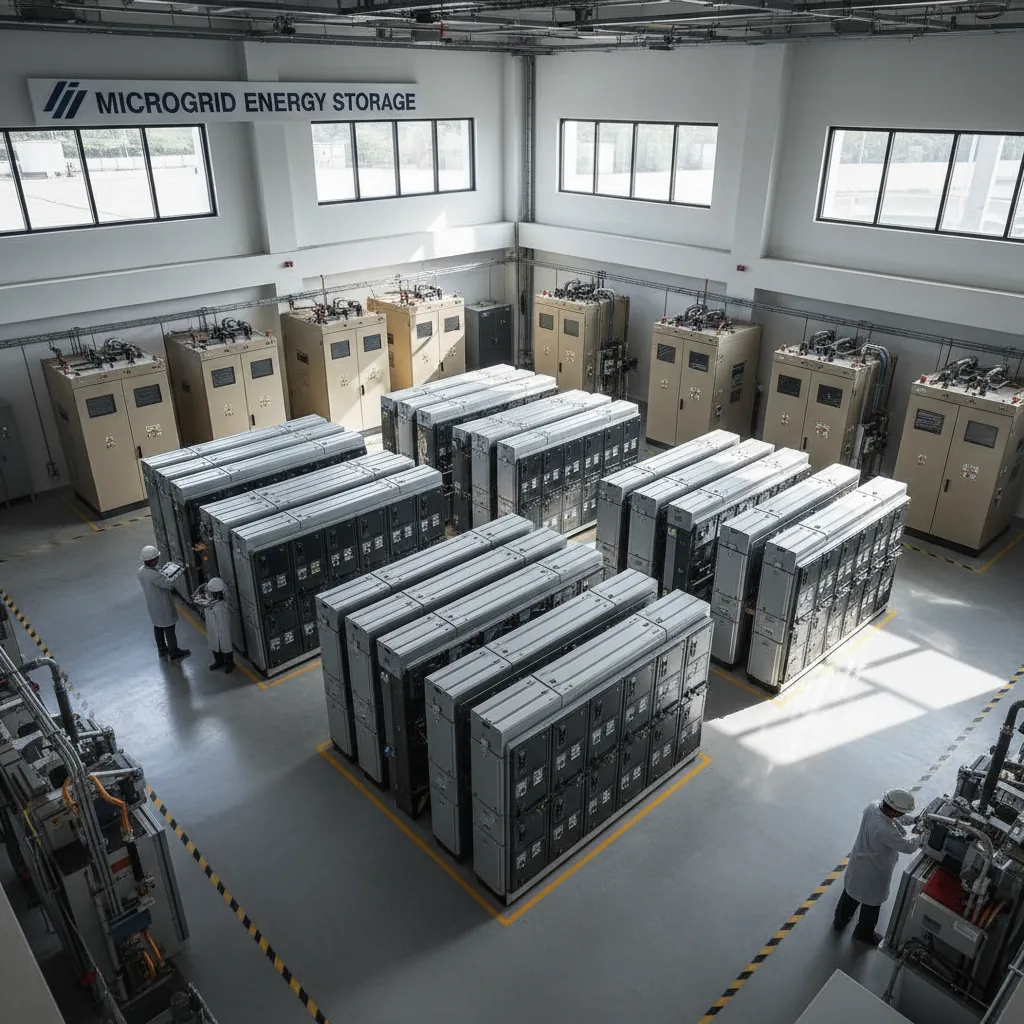
The microgrid architecture described above only performs as designed when storage is available to bridge the gap between generation variability and operational load demands. Battery energy storage systems (BESS) have moved from pilot-project status to active deployment at Canadian industrial sites, and the reasons are practical ones that show up directly in operations budgets.
For an operations team managing a site with multiple high-draw motor loads, the most immediate value of BESS is peak shaving. Large motor starts, particularly on conveyors, pumps, and winches, create current spikes that utilities charge for through demand tariffs or that overwhelm on-site generation capacity. A properly sized BESS absorbs those transient peaks, flattening the load profile and reducing both utility penalties and generation oversizing requirements. In deregulated electricity markets, storage also enables time-of-use optimization, charging during low-rate periods and discharging during high-cost windows, which produces measurable reductions in electricity spend over an annual operating cycle.
Grid-connected sites gain an additional benefit: backup capacity during instability events, which is particularly relevant as transmission infrastructure in parts of western and northern Canada ages under increasing demand.
The alignment with federal clean energy investment policy means capital cost support for BESS deployments is increasingly accessible, and the availability of Canadian-manufactured battery modules is expanding the supply chain options for domestic procurement.
None of this functions without real-time energy visibility. Effective storage dispatch requires knowing exactly what load profile the site is running at any given moment, what generation sources are contributing, and what the next operational demand window looks like. Intelligent monitoring is not a supplementary feature in this context; it is the prerequisite that makes storage investment perform as modelled rather than as a passive backup system that rarely engages when and how it should.
PMDD Motor Systems: A High-Efficiency Path Into Industrial Electrification

The energy visibility and storage dispatch capabilities described above matter most when the underlying motor loads are as efficient as possible. This is where PMDD motor systems enter the electrification planning conversation not as a product pitch, but as a systems answer to several barriers at once.
Permanent Magnet Direct Drive technology eliminates the gearbox stage entirely. In conventional induction motor installations driving conveyors, winches, pumps, or marine propulsion, the gearbox serves as a necessary intermediary between motor speed and application torque requirements. That intermediary carries a cost: mechanical losses across the gear stages, scheduled maintenance intervals, lubricant management, and a failure mode that sits between the motor and the driven equipment. Removing it reduces the number of components the maintenance team owns, shortens the fault tree an engineering team has to manage, and delivers torque directly to the shaft at the efficiency the permanent magnet design provides.
The efficiency profile of PMDD across variable torque ranges is particularly relevant to mining and marine applications, where load demands shift continuously. Conventional induction motors are optimized for a relatively narrow operating band; performance degrades at partial load. PMDD systems maintain high efficiency across a wider torque envelope, which means real-world energy consumption matches design-stage projections more closely across an actual operating cycle.
For industrial electrification Canada 2026 planning, the downstream effect is concrete: lower per-unit energy consumption reduces the grid capacity or on-site generation capacity the transition requires. On a remote microgrid, that reduction in peak and sustained electrical demand translates directly into smaller BESS sizing, fewer generation assets, and lower infrastructure capital. The efficiency gain at the motor level compounds through every layer of the power architecture above it.
What Canadian Industrial Operators Should Be Doing Before End of 2026

The efficiency gains described above are only realized if the planning work begins now. For operators working toward industrial electrification Canada 2026 targets, the window for decisions that will shape the next capital cycle is closing. Here is where to focus that work.
Audit highest-energy consumption assets first. Identify which motors, drives, and heating loads represent the largest fuel or electricity spend on site. These are the candidates where electrification delivers the fastest payback and where a poorly chosen technology path carries the most financial exposure. Conveyors, pumps, and winches typically surface at the top of this list in mining and marine operations.
Map your site's power architecture constraints. Before specifying any electrification technology, establish whether the site has reliable grid access, limited grid access requiring hybrid backup, or full off-grid dependency. That answer determines whether remote site infrastructure solutions and microgrid design are prerequisites, not afterthoughts.
Evaluate drive-system redesign, not just motor replacement. Swapping an induction motor for another induction motor does not resolve the gearbox problem. Evaluate whether PMDD motor systems allow elimination of the gearbox stage entirely, reducing both capital cost and long-term maintenance burden on the highest-duty applications.
Engage federal and provincial incentive programs now. NRCan investment programs and the Clean Electricity Strategy both carry application timelines that do not align with late-cycle procurement requests. Engaging during engineering and feasibility stages, rather than after purchase orders are issued, is the difference between capturing incentive value and missing it entirely.
Lock electrification scope into the next capital budget submission. Equipment decisions made in this cycle carry 10 to 15 year operational lifespans. Planning for electrification as a future-cycle item means inheriting a more constrained regulatory environment and a narrower window on available incentives. MotiraTech's industrial energy solutions are structured to support this planning process from site assessment through system commissioning, grounded in Canadian operational realities rather than generic framework advice.
As Canada moves toward a cleaner industrial future in 2026, electrification remains a cornerstone of sustainable growth. Navigating this transition requires a careful balance of innovative technology and strategic infrastructure planning. If you want expert help managing these complex shifts, exploring our tailored industrial solutions can provide the clarity your facility needs. We are here to support your journey toward more efficient operations while ensuring your organization remains competitive in an evolving regulatory landscape.